


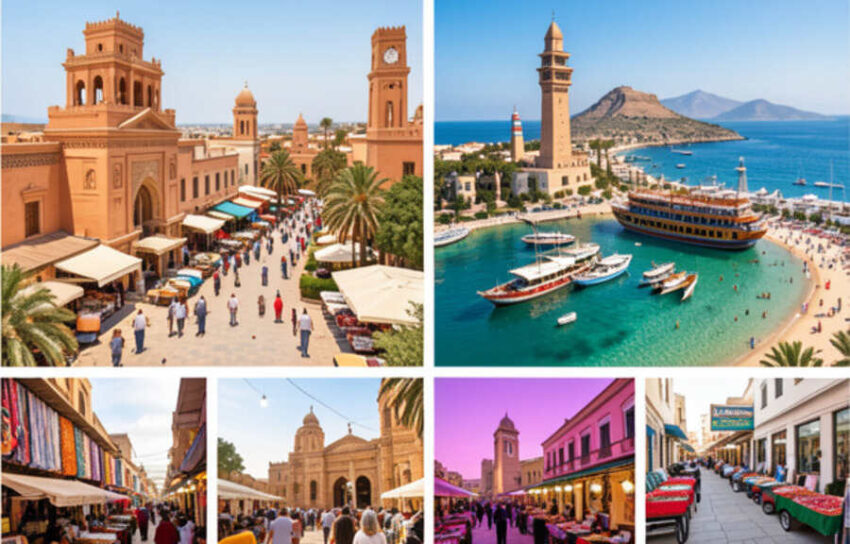
Tunisia Joins Egypt and Morocco in Redefining North Africa’s Tourism Landscape in 2025, Catalysing a New Era of Global Travel Excellence: Everything You Need to Know
Tunisia Joins Egypt and Morocco in Redefining North Africa’s Tourism Landscape in 2025, Catalysing a New Era of Global Travel Excellence: Everything You Need to Know
In 2025, North Africa has taken a significant leap forward in the global tourism sector, with Tunisia joining Egypt and Morocco in achieving remarkable growth. This transformative year has reshaped the region’s tourism landscape, driven by a combination of strategic investments, a rich cultural heritage, and a global recovery in travel. As international arrivals surged globally, North Africa’s key destinations capitalized on this momentum, collectively generating an astounding $35.25 billion in tourism revenue. Tunisia, once a more modest player, has now firmly established itself alongside Egypt and Morocco as a leader in driving tourism excellence, marking the beginning of a new era for the region. In this article, we’ll explore how these three countries are redefining North Africa’s tourism identity and what it means for the future of global travel.
This article explores the impressive achievements of Egypt, Morocco, and Tunisia in 2025 and how their distinctive tourism offerings contributed to the region’s remarkable rise. The diverse models and approaches each country has taken showcase North Africa’s potential as a key player in global tourism.
Egypt: The Undisputed Leader in Tourism Revenue
Egypt emerged as the leader in North African tourism in 2025, generating a massive $17.8 billion in revenue. This impressive 17% year-on-year increase was driven by a 21% rise in tourist arrivals, which reached 19 million. The country’s timeless appeal, with its Pharaonic heritage and ancient wonders like the Pyramids of Giza and the Sphinx, has always been a major draw for international tourists. However, it was the growth in premium, high-spending visitors that truly set Egypt apart in 2025.
The average expenditure per tourist in Egypt reached $937, the highest in North Africa. This reflects Egypt’s appeal to affluent markets, including Germany, Russia, and Gulf countries, with high-end resorts such as Sharm el-Sheikh playing a key role in attracting luxury travellers. Egypt’s successful blend of historical tourism with modern resort offerings positions it as a premium destination for cultural and leisure travel alike.
The Egyptian government’s long-term tourism strategy aims to increase arrivals to 30 million by 2028, with a target of $24 billion in tourism revenue. To achieve this, Egypt is focusing on expanding air connectivity, improving visa policies, and diversifying its tourism products. These efforts will not only reinforce Egypt’s status as a top cultural destination but also expand its appeal to adventure tourism, medical tourism, and luxury resorts.
Morocco: A Stunning Growth Trajectory
Morocco saw a monumental rise in tourism in 2025, with 19.8 million visitors—a 13.8% increase from the previous year. This surge made Morocco the most visited North African country, while also setting new records in tourism revenue. With $14.7 billion in tourism receipts, Morocco’s growth was fueled not just by increased arrivals but by the rising value of each tourist. The average spending per tourist hit $742, a significant rise attributed to higher hotel rates, longer stays, and a more diverse offering of tourism experiences.
Morocco’s tourism model stands out for its diversity. From seaside resorts along the Mediterranean and Atlantic coasts to the historical cities of Marrakech, Fes, and Casablanca, Morocco offers a rich variety of experiences. The country also benefits from nature tourism, with the Atlas Mountains, Sahara Desert, and coastal areas attracting both adventure and eco-tourists. This diversity, combined with Morocco’s growing popularity, has made it a prime destination for tourists seeking both relaxation and cultural immersion.
Morocco’s tourism sector has now surpassed remittances from Moroccans abroad, becoming the country’s second-largest foreign exchange earner. As tourism continues to play a critical role in the national economy, the Moroccan government is focused on expanding its tourism infrastructure and promoting new experiences, ensuring the sector’s long-term success and growth.
Tunisia: A Milestone Year of Recovery
Tunisia made a major breakthrough in 2025 by welcoming over 11 million visitors—a record number for the country. This marked a significant recovery from previous years, with tourism revenue climbing to around $2.75 billion, an increase of 6.5% from the previous year. While Tunisia’s performance did not match the meteoric growth seen in Egypt and Morocco, the country’s achievement was still impressive, considering the challenges it faced.
However, Tunisia’s primary challenge lies in its reliance on mass tourism, which has resulted in low average spending per tourist, around $250. Much of the revenue flows to foreign tour operators due to the popularity of all-inclusive packages, which limits the economic benefits for local businesses. In response, Tunisia is taking steps to diversify its tourism offerings, focusing on sustainable and niche markets such as eco-tourism, cultural tourism, and wellness travel. These initiatives aim to shift Tunisia’s tourism model from high volume to higher value, attracting tourists who spend more and stay longer.
Tunisia is also looking to improve its infrastructure and expand its luxury tourism options. By increasing its appeal to more affluent travellers and investing in upmarket tourism, Tunisia aims to increase its revenue per tourist in the coming years, ensuring a sustainable tourism future that benefits both local communities and the broader economy.
The Future of North African Tourism: Growth, Diversification, and Sustainability
The success of Egypt, Morocco, and Tunisia in 2025 showcases North Africa’s potential as a tourism powerhouse. As the region continues to grow, there are several key factors that will shape its future. Investment in tourism infrastructure, from improved airports and transport links to better hotel facilities, will be crucial in sustaining growth. Additionally, the shift towards sustainable tourism and eco-friendly practices will play a major role in ensuring that the region’s natural and cultural heritage is preserved while still driving economic growth.
The diversification of tourism offerings is also essential. Egypt, Morocco, and Tunisia are all moving beyond traditional beach resorts and cultural landmarks to offer adventure tourism, wellness retreats, and luxury experiences. This diversification will help the region tap into new and emerging markets while continuing to attract the diverse range of visitors that North Africa has become known for.
Ultimately, the tourism industry in North Africa is poised for continued success. With strong growth in international arrivals and revenue, these countries are not only recovering from past challenges but are positioning themselves as major players in the global tourism market. By focusing on sustainability, infrastructure, and diversification, Egypt, Morocco, and Tunisia will continue to lead the charge in North Africa’s tourism revolution.
The post Tunisia Joins Egypt and Morocco in Redefining North Africa’s Tourism Landscape in 2025, Catalysing a New Era of Global Travel Excellence: Everything You Need to Know appeared first on Travel And Tour World.
Source: travelandtourworld.com



Sorry, the comment form is closed at this time.