


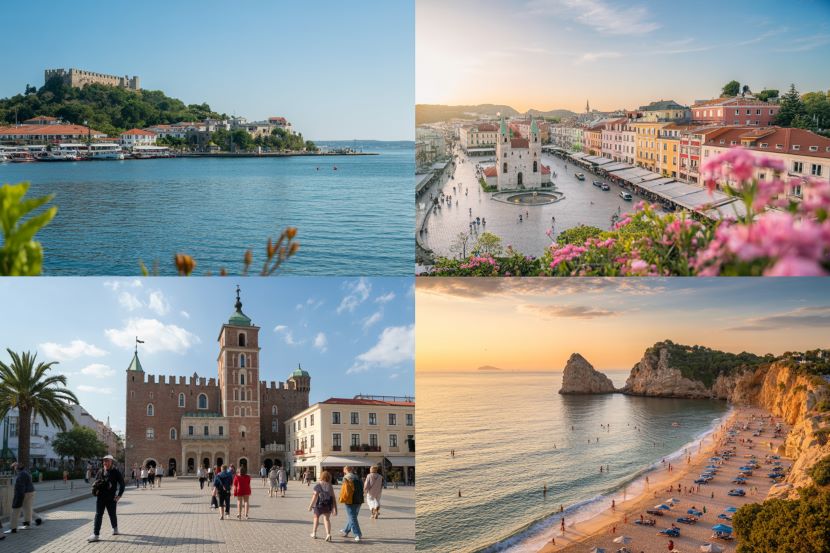
Turkey Joins Poland, Portugal and More to Launch Europe’s Most Competitive Easter 2026 Budget Break Race — How Marmaris, Kraków and Albufeira Are Capturing Traveler Attention Before Prices Soar
Turkey Joins Poland, Portugal and More to Launch Europe’s Most Competitive Easter 2026 Budget Break Race — How Marmaris, Kraków and Albufeira Are Capturing Traveler Attention Before Prices Soar
Turkey, Poland and Portugal are positioning Marmaris, Kraków and Albufeira as three of Europe’s most strategically appealing destinations for Easter 2026 travel, as early April public holidays reshape short-break demand across the continent. With Good Friday falling on 3 April 2026 and Easter Monday on 6 April 2026 in England and Wales, the compressed spring holiday window is expected to intensify travel flows toward walkable, infrastructure-ready destinations. Official tourism and government sources in Turkey, Poland and Portugal indicate that these three cities offer strong foundations for value-focused travel: compact sightseeing zones, structured public transport, defined visitor regulations and accessible cultural assets.
Rather than relying on promotional claims or commercial pricing comparisons, this article draws exclusively on official government and municipal tourism information to examine why Marmaris, Kraków and Albufeira are emerging as practical and policy-supported choices for Easter 2026 city breaks.
The Easter 2026 Travel Window: Why Timing Matters
Easter remains one of Europe’s most concentrated travel periods. In 2026, Good Friday and Easter Monday fall on 3 April and 6 April respectively in England and Wales, creating a long-weekend structure that traditionally drives high short-haul demand. Similar holiday alignments across parts of Europe generate overlapping peak travel days.
In compressed holiday windows, destinations that minimize transit complexity and maximize in-city experiences become particularly attractive. Walkability, public transport efficiency and centralised cultural landmarks allow visitors to reduce both time loss and unpredictable spending. Marmaris, Kraków and Albufeira each meet these structural requirements in different ways.
Turkey: Marmaris Blends Coastal Accessibility with Government-Managed Heritage
A Resort Destination with Structured Tourism Capacity
Marmaris, located in Muğla Province along Turkey’s southwestern coast, is officially described by the Turkish Ministry of Culture and Tourism as a major tourism centre with significant seasonal capacity. The town’s infrastructure is built around accommodating large visitor flows, particularly during peak tourism periods.
This structural readiness benefits Easter travellers. Early April falls just before the height of the Mediterranean summer season, meaning visitors can access beaches, promenades and harbour areas without the extreme congestion seen in high summer months.
Marmaris Castle and Museum: Cultural Depth Inside the Resort Core
While widely associated with seaside tourism, Marmaris also offers a nationally managed cultural site at its centre. Marmaris Castle was nationalised in 1979, restored between 1980 and 1990, and opened as a museum on 18 May 1991 under the authority of Turkey’s Ministry of Culture and Tourism.
The presence of a government-administered museum within the town centre provides an accessible cultural anchor. For short Easter stays, this reduces reliance on paid day trips and allows travellers to incorporate structured heritage exploration without additional transport expenses.
Visitor Support and Regional Connectivity
Provincial tourism resources in Muğla provide official tourist information contacts for Marmaris and nearby destinations such as Bodrum and Dalaman. This formalised support network enhances planning reliability, particularly during holiday periods when service schedules may vary.
In practical terms, Marmaris offers:
Harbour and marina areas suited to walking exploration
Old town streets and coastal viewpoints
Access to beaches without requiring extended travel
A central museum attraction managed at national level
These features align well with short, budget-conscious Easter trips where efficient use of time directly affects overall cost control.
Poland: Kraków’s Compact Heritage Core and Public Transport Advantage
UNESCO Recognition and Concentrated Landmarks
Kraków’s historic centre is inscribed on the UNESCO World Heritage List, a status referenced by municipal authorities. The city’s official tourism platform highlights key districts including the Main Market Square, Wawel area and Kazimierz as primary visitor zones.
The geographical proximity of these areas allows visitors to construct itineraries largely on foot. In peak holiday periods such as Easter, this density significantly reduces logistical friction and the need for multiple paid transfers.
Municipal Transport as a Cost-Control Tool
Kraków’s official travel portal outlines an extensive tram and bus network serving both the city centre and surrounding districts. Public transport coverage enables travellers to access museums, neighbourhoods and transport hubs without relying heavily on taxis or private transfers.
The ability to use trams and buses efficiently becomes especially valuable during holiday weekends when road congestion may increase.
Structured Access Through the Kraków Tourist Card
The city’s official tourism resources describe the Kraków Tourist Card as a product designed to streamline entry into multiple museums and attractions. For travellers planning to visit several heritage sites within a short timeframe, structured entry passes can simplify budgeting and reduce time spent queuing.
Kraków’s advantage lies in its ability to deliver high cultural density within a compact urban footprint. For Easter 2026 visitors seeking heritage-driven experiences without the premium pricing of larger Western European capitals, this concentration of accessible attractions is significant.
Portugal: Albufeira’s Coastal Appeal Under Clearer Visitor Regulations
A Beach Hub with Formal Behavioural Guidelines
Albufeira, situated in Portugal’s Algarve region, is widely recognised as a beach and resort destination. However, recent municipal policy developments have introduced an additional planning dimension for visitors.
The Municipality of Albufeira has published a Code of Conduct aimed at regulating public behaviour in response to disruptive incidents. The UK government’s official travel advice for Portugal confirms that on-the-spot fines between 150 and 1800 euros may be imposed for breaches of public conduct rules.
For budget travellers, regulatory awareness is now essential. Avoiding fines and compliance issues is as important to overall trip value as accommodation or transport savings.
Algarve’s Broader Tourism Governance
Turismo de Portugal has also communicated sustainability initiatives in the Algarve, including water conservation campaigns. These initiatives reflect a broader policy direction toward responsible tourism management and resource protection.
Albufeira’s combination of scenic coastline, beach accessibility and defined behavioural expectations positions it as a destination balancing leisure appeal with governance oversight.
Practical Implications for Easter 2026
Early April in the Algarve typically falls within shoulder-season conditions. This period often offers milder weather and more manageable visitor numbers compared to peak summer months. However, holiday weekends can still generate concentrated nightlife activity.
For Easter 2026 visitors, careful itinerary planning should include:
Awareness of municipal conduct regulations
Respect for public space rules
Use of official tourism information platforms
Alignment with sustainability messaging
Responsible behaviour becomes part of cost management.
The Structural Formula Behind These Emerging Budget Break
Across Turkey, Poland and Portugal, the appeal of Marmaris, Kraków and Albufeira is rooted less in promotional messaging and more in operational structure.
Walkability and Density
All three destinations offer central zones where major experiences are geographically concentrated. This reduces dependence on long-distance transfers and allows short-stay visitors to maximize sightseeing time.
Public Transport Infrastructure
Kraków’s tram and bus network, Marmaris’ compact resort layout and Albufeira’s defined tourism districts each contribute to efficient movement within the destination.
Cultural and Recreational Balance
Marmaris integrates a government-managed museum within a seaside resort. Kraków provides layered heritage within a walkable historic core. Albufeira pairs coastal scenery with regulated nightlife environments.
Governance as a Travel Factor
Albufeira’s Code of Conduct demonstrates how municipal regulation now directly influences the tourism experience. Structured visitor expectations may enhance overall destination quality while requiring heightened traveller awareness.
Easter 2026: Planning Considerations Across Turkey, Poland and Portugal
Travellers considering Marmaris, Kraków or Albufeira for Easter 2026 should factor in the following:
Confirm public holiday timing relevant to departure country and destination.
Use official tourism portals for up-to-date transport and museum information.
Review municipal conduct rules where applicable.
Structure itineraries around central districts to reduce travel time.
Prioritize public transport systems over last-minute private transfers.
Early planning remains particularly important due to the compressed Easter travel window.
The Bigger Picture: A Shift in European Budget Travel Strategy
The rise of Marmaris, Kraków and Albufeira in Easter 2026 planning signals a broader evolution in European short-break tourism.
Budget travel is increasingly influenced by:
Infrastructure reliability
Cultural density within urban cores
Transparent governance policies
Sustainability messaging
Reduced dependency on paid excursions
Rather than competing solely on pricing, destinations are competing on efficiency, clarity and structured visitor management.
Turkey’s Marmaris offers coastal accessibility reinforced by nationally managed heritage assets. Poland’s Kraków provides concentrated historical value supported by municipal transport systems. Portugal’s Albufeira combines scenic leisure appeal with firm behavioural frameworks and sustainability initiatives.
Together, these three destinations reflect a maturing European travel environment where operational structure shapes value as much as airfare or hotel rates.
Conclusion: Turkey, Poland and Portugal at the Centre of Easter 2026 Value Travel
As Easter 2026 approaches, Marmaris in Turkey, Kraków in Poland and Albufeira in Portugal are emerging as strategically aligned short-break destinations capable of absorbing concentrated holiday demand. Official government and municipal sources show that these cities are not only prepared for visitor inflows but are actively managing tourism through infrastructure, regulation and structured cultural access.
For travellers seeking cost control during one of Europe’s busiest spring travel periods, the defining advantages of these destinations lie in their walkability, public transport systems, cultural concentration and clearly communicated visitor expectations.
Easter 2026 may well confirm that Europe’s most effective budget breaks are no longer defined purely by price — but by how intelligently a destination is designed to function during peak demand.
The post Turkey Joins Poland, Portugal and More to Launch Europe’s Most Competitive Easter 2026 Budget Break Race — How Marmaris, Kraków and Albufeira Are Capturing Traveler Attention Before Prices Soar appeared first on Travel And Tour World.
Source: travelandtourworld.com



Sorry, the comment form is closed at this time.