


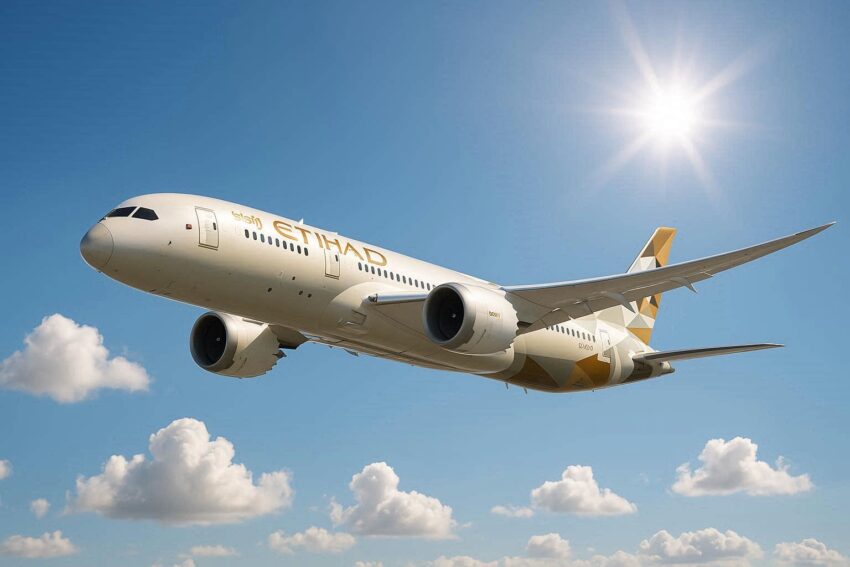
UAE, Australia, US, and Asia Witness Major Shift as Etihad Airways Withdraws Airbus A380 from Key Global Routes
UAE, Australia, US, and Asia Witness Major Shift as Etihad Airways Withdraws Airbus A380 from Key Global Routes
In a significant move that reflects the evolving aviation landscape, Etihad Airways has officially ended Airbus A380 operations on six major global routes. This decision marks a major shift in the UAE-based carrier’s approach to its long-haul network strategy. As one of the last operators of the iconic Airbus A380, Etihad’s decision to retract this 486-seat superjumbo from certain international destinations highlights the airline’s continued efforts to streamline its fleet and adapt to changing market demands.
The withdrawal of the A380, which had long been a flagship aircraft for Etihad, is a response to a variety of factors, including reduced demand on certain routes and the airline’s focus on optimizing aircraft deployment. As of 2026, Etihad Airways plans 2,104 Airbus A380 departures, accounting for its fourth-highest annual deployment. However, the aircraft will no longer serve several high-profile destinations across Australia, the United States, Asia, and India.
The Routes Affected by the A380 Withdrawal
The affected routes, which no longer receive the Airbus A380, include John F. Kennedy International Airport (JFK), Sydney Airport (SYD), Melbourne Airport (MEL), Chhatrapati Shivaji Maharaj International Airport (BOM), Incheon International Airport (ICN), and King Abdulaziz International Airport (JED). This move is part of a broader strategy to replace the A380 with more flexible and fuel-efficient aircraft, such as the Airbus A350.
Etihad’s final Airbus A380 flight to New York JFK took place in June 2025, while service to Sydney and Melbourne has already been terminated. The decision to cease A380 operations in these cities is particularly significant, as these destinations had long been key markets for the airline’s superjumbo.
The New York JFK route, in particular, had been a stronghold for Etihad’s A380 service, with 2,413 A380 departures between 2015 and 2020. Despite a decline in demand in recent years, Etihad’s A380 continued to offer a premium experience for travelers flying between the UAE and the United States. The shift to the Airbus A350-1000 on this route will not only maintain capacity but also introduce the airline’s newest business class product.
Etihad’s Streamlining of the A380 Network
While the A380 has been retired from the six routes mentioned above, Etihad continues to operate the aircraft on select high-demand destinations where capacity is crucial. As of 2026, the Airbus A380 will remain in service for flights to London Heathrow (LHR), Paris Charles de Gaulle (CDG), Singapore Changi Airport (SIN), Narita International Airport (NRT), and Toronto Pearson International Airport (YYZ).
The airline has noted that these destinations represent areas with significant premium demand, making them ideal candidates for the high-capacity A380. In particular, the route to Singapore, which was introduced in 2025, helps the airline capitalize on Southeast Asia’s booming travel demand.
Economic Impact and Future Plans
This shift marks a pivotal moment in Etihad Airways’ efforts to adapt its fleet to modern demands. The decision to phase out the A380 on lower-demand routes comes as Etihad continues to invest in a more versatile fleet that better meets the needs of today’s travelers. The Airbus A350, now replacing the A380 on routes such as New York JFK, is more fuel-efficient and better suited to long-haul flights, enabling Etihad to remain competitive while managing operational costs.
Additionally, the airline has announced its plans to introduce A380 services to Tokyo Narita (NRT) in June 2026. This will be the first time the A380 operates to Tokyo, expanding Etihad’s presence in the Japanese market and enhancing its ability to cater to the growing number of premium passengers traveling to and from the region.
With London, Paris, and Toronto continuing to benefit from the A380’s capacity, Etihad’s focus is on deploying the aircraft to the most profitable routes, while adjusting its overall network to better align with demand. As the airline prepares for over 2,000 A380 departures in 2026, it remains committed to strategically balancing high-capacity services with more flexible aircraft options.
Etihad’s Vision for Long-Term Network Adaptability
Etihad’s decision to withdraw the Airbus A380 from certain routes signals a broader trend within the aviation industry: airlines are increasingly prioritizing efficiency, adaptability, and sustainability in their fleets. As travel patterns evolve, particularly in the aftermath of the COVID-19 pandemic, airlines must be agile enough to respond to changes in demand while maintaining a high level of service for passengers.
The reallocation of A380 aircraft from lower-demand markets to high-value destinations reflects Etihad’s long-term vision to remain a leading carrier in the premium travel sector. By maintaining its fleet of A380 aircraft for select long-haul routes, the airline ensures that it continues to offer a unique product for passengers who seek the luxurious experience provided by the superjumbo.
Etihad Airways’ Commitment to Evolving Travel
The withdrawal of Etihad Airways’ Airbus A380 from key international routes is a defining moment in the airline’s evolution. As the carrier focuses its efforts on more profitable routes and future fleet modernization, it remains committed to delivering a premium travel experience for passengers. By adapting its operations to meet the demands of the current market, Etihad is positioning itself for long-term success in an increasingly competitive and dynamic aviation industry.
With over 2,100 A380 departures planned for 2026, Etihad will continue to be a prominent player in the global aviation market, adapting to changing trends while maintaining its reputation for luxury and service excellence.
The post UAE, Australia, US, and Asia Witness Major Shift as Etihad Airways Withdraws Airbus A380 from Key Global Routes appeared first on Travel And Tour World.
Source: travelandtourworld.com



Sorry, the comment form is closed at this time.