


UK Foreign Office Travel Warning 2026: The Full List of 24 “No-Go” Nations
UK Foreign Office Travel Warning 2026: The Full List of 24 “No-Go” Nations
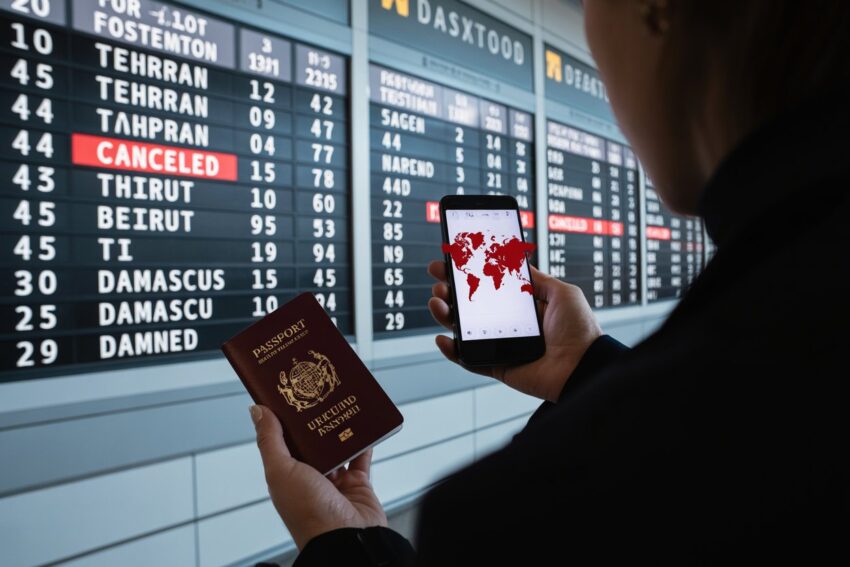
For the modern traveler, the “Red List” was once a term associated with pandemic-era health protocols. However, as of March 2026, the color red on the global map has taken on a more sobering meaning: safety and survival. Following significant military escalations involving the U.S., Israel, and Iran, the Foreign, Commonwealth & Development Office (FCDO) has executed a massive expansion of its “Do Not Travel” list.
This isn’t merely a suggestion—it is a critical advisory that fundamentally alters the legal and financial safety net for British citizens currently abroad or planning to depart.
The “No-Go” Zone: 24 Nations Under the Shadow
The FCDO’s update is categorical. Total “Do Not Travel” warnings—covering either the entire country or significant specific regions—now apply to a swath of the globe stretching from the Mediterranean to the Hindu Kush.
The Conflict Core (Total Avoidance): The most severe warnings are concentrated in the Middle East, where active hostilities have made civilian travel impossible.
Iran, Israel, Lebanon, Syria, Iraq, and Yemen. The FCDO has temporarily withdrawn staff from its embassy in Tehran, noting that the ability to provide consular assistance is now “extremely limited.”
The High-Risk Perimeters: Warnings have also been extended to nations bordering the conflict zones or those experiencing secondary security risks:
Egypt: Specifically, the Sinai Peninsula and areas near the border.
Jordan: Once a stable tourism hub, its proximity to missile corridors has triggered new warnings.
Turkey: Specific warnings remain for the southeastern borders.
The Extended Global Reach: Beyond the Middle East, the “Do Not Travel” list includes nations facing internal unrest, political instability, or active conflict:
Afghanistan, Belarus, Libya, Mali, Niger, South Sudan, the Central African Republic, and Russia.
The Insurance Trap: What “Red List” Means for You
The most immediate impact of an FCDO “Do Not Travel” warning for the average holidaymaker isn’t just the physical risk—it’s the financial one.
The moment a destination is added to the “Red List,” standard travel insurance policies typically become void. If you choose to travel against government advice, you are essentially on your own. If you suffer a medical emergency—even one unrelated to the conflict, like a car accident or a sudden illness—your provider will likely refuse to pay out.
Furthermore, if you are currently in a country that has just been added to the list, the FCDO’s message is clear: “Leave now by commercial means if it is safe to do so.”
Airspace Closures and Transit Hubs
One of the most disruptive aspects of the March 2026 update is the impact on flight paths. Major international hubs like Dubai (UAE), Qatar, and Kuwait have seen “emergency alerts” due to intercepted missile threats. While these countries are not yet on the total “Do Not Travel” list, the FCDO has warned of “secondary disruptions.”
Flights to “Green” zones like Thailand or the Maldives may now take significantly longer as airlines reroute to avoid the blacklisted airspaces of Iran and Iraq. Travelers are urged to check with their airlines daily, as schedules are shifting by the hour.
What Should You Do Now?
If you have a trip booked or are currently overseas, follow these steps:
Check the Official Source: Don’t rely on social media. Visit the FCDO Travel Advice website for the most accurate, country-by-country breakdown.
Contact Your Tour Operator: If your destination has moved to the “Do Not Travel” list, you are legally entitled to a refund. However, do not cancel the trip yourself. Wait for the provider to cancel so that your consumer rights under the Package Travel Regulations remain protected.
Register Your Presence: If you are in a high-risk region, use the FCDO’s online service to register your location. This allows the government to contact you in the event of an evacuation or emergency.
Review the Fine Print: Check your insurance policy for “Civil Unrest” or “War” exclusions. Even in “Amber” list countries (where travel is advised against except for essential reasons), coverage can be spotty.
A Human Perspective: The Heart of Travel
At its core, travel is about connection and discovery. Seeing so many vibrant cultures and historic landscapes behind a “red line” is a tragedy for both the traveler and the local communities who rely on tourism.
The March 2026 updates serve as a reminder that the “invisible architecture” of peace is what allows us to explore the world. While the “City of Light” (Paris) prepares to host the World’s 50 Best Hotels later this year, other parts of the world are going dark. For now, the best advice for any Brit is simple: look at the map, listen to the experts, and remember that no destination is worth the risk of being left without a way home.
The post UK Foreign Office Travel Warning 2026: The Full List of 24 “No-Go” Nations appeared first on Travel And Tour World.
Source: travelandtourworld.com



Sorry, the comment form is closed at this time.