


UK Issues Urgent Travel Warning: Spain’s High-Speed Train Collision Disrupts Crucial Rail Links, Services partially restored, Key Routes Still under Work
UK Issues Urgent Travel Warning: Spain’s High-Speed Train Collision Disrupts Crucial Rail Links, Services partially restored, Key Routes Still under Work
A major travel advisory now affects travellers from the United Kingdom to Spain following a catastrophic high‑speed train derailment and collision near Adamuz, Córdoba, in Andalusia, southern Spain earlier this year. The UK Foreign, Commonwealth & Development Office (FCDO) has issued updated guidance highlighting ongoing rail disruption on key high‑speed corridors that remain partially affected weeks after the disaster.
Deadly Collision in Andalusia: What Happened on January 18, 2026
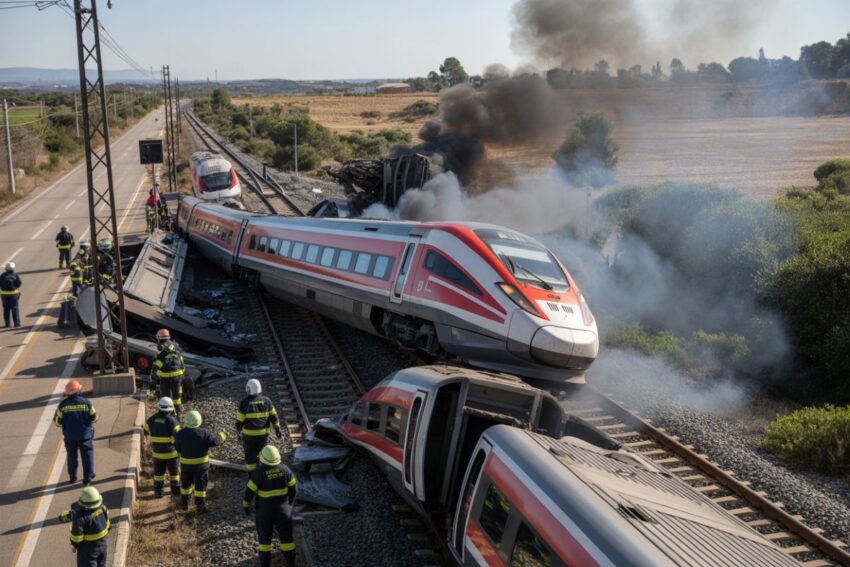
On the evening of 18 January 2026, two high‑speed passenger trains collided near Adamuz on the Madrid‑Seville high‑speed rail line. An Iryo‑operated train travelling from Málaga to Madrid derailed, crossed onto the opposite track, and was struck by a second train operated by Renfe, bound from Madrid to Huelva. The impact caused both trains to derail; the second train’s front carriages plunged down an embankment. Official reports confirm that 46 passengers were killed and 292 were injured in what became Spain’s worst rail disaster since 2013.
Rail Network Effects: Disruption on Madrid–Andalusia Routes
The collision severely disrupted one of Spain’s busiest rail arteries connecting central Spain with the south. Immediate suspension of high‑speed services between Madrid and key Andalusian destinations followed, with restoration works ongoing. While parts of the corridor have resumed operations, routes to Málaga and Algeciras remain affected, with journeys still subject to significant disruption and replacement transport arrangements combining trains with buses.
UK Government Issues Travel Advice for Rail Travelers
The FCDO travel advice for Spain now reflects the status of the rail network following the Adamuz accident. It emphasises that although high‑speed rail services between Madrid and some parts of Andalusia have resumed, certain routes are still severely disrupted. The guidance recommends travellers check the latest train operator information, allow extra time for journeys and follow local authority instructions before travelling.
How Rail Operators Are Responding to Disruption
Spain’s national rail operator Renfe and private carrier Iryo have worked with the infrastructure manager ADIF to repair damaged tracks, restore services and ensure safety. From mid‑February 2026, services between Madrid and cities such as Seville, Cádiz and Granada have been progressively reinstated. However, connections to Málaga remain altered with a road‑based alternative due to ongoing infrastructure work. Passengers affected by cancellations have been offered free changes or refunds where applicable.
Investigation and Safety Review After the Crash
A formal investigation into the cause of the Adamuz collision is underway. Early hypotheses focus on a possible rail defect that may have led to the initial derailment on a straight, recently refurbished section of track. Spanish rail authorities, alongside national accident investigators, are reviewing infrastructure and train data to determine the sequence of events that caused the disaster.
What Travellers Need to Know Before Departure
Travel planners and tourists heading to or within Spain should remain alert to rail service updates. Even where high‑speed lines have reopened, journey times might be longer than advertised due to modified schedules, safety speed limits or alternate transport arrangements. Check official operator platforms such as Renfe and Iryo status pages and ADIF network updates for real‑time conditions.
Impact on Tourism and Connectivity in Southern Spain
Andalusia attracts millions of visitors annually, with its cultural cities and coastlines among Spain’s most popular destinations. The accident’s impact on rail connections has added complexity to travel logistics, particularly for international visitors flying into major hubs and intending to connect via high‑speed trains. Advanced planning, flexible bookings, and awareness of replacement services have become essential parts of itineraries involving the south.
Recovery and the Road Ahead
Rail services between Madrid and Andalusia continue to normalise, with some segments restored and others scheduled for phased reopening in the coming weeks. Rail operators and authorities remain focused on safety validations, infrastructure inspections and reducing disruption while ensuring the network’s long‑term resilience.
The post UK Issues Urgent Travel Warning: Spain’s High-Speed Train Collision Disrupts Crucial Rail Links, Services partially restored, Key Routes Still under Work appeared first on Travel And Tour World.
Source: travelandtourworld.com



Sorry, the comment form is closed at this time.