


United Arab Emirates Travel Industry Feels The Heat As Dubai, India, And Wider West Asia Routes See Sudden Booking Withdrawals Amid Regional Conflict — A Closer Look at What This Means for Tourists Worldwide
United Arab Emirates Travel Industry Feels The Heat As Dubai, India, And Wider West Asia Routes See Sudden Booking Withdrawals Amid Regional Conflict — A Closer Look at What This Means for Tourists Worldwide
Dubai and UAE tourism are facing an abrupt downturn as over 50 per cent of travel bookings have reportedly been cancelled within just 24 hours amid escalating tensions across the Middle East. The sudden surge in cancellations, combined with flight suspensions to and from the United Arab Emirates, has left numerous tourists stranded and travel operators scrambling to manage refunds and itinerary changes.
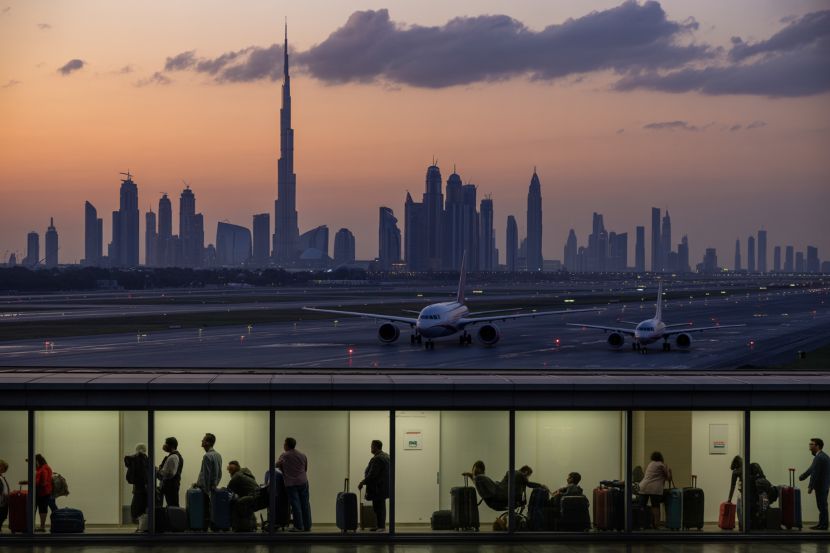
The unfolding crisis has not only disrupted leisure travel between India and Dubai but has also shaken confidence among honeymooners, family travellers, and group tour participants who had planned departures over the coming weeks. With air connectivity temporarily affected and uncertainty dominating regional travel advisories, Dubai’s tourism-dependent economy is witnessing one of its sharpest short-term shocks in recent times. Despite the turmoil, iconic attractions such as the Burj Khalifa continue to receive visitors, underscoring the complex balance between caution and continuity in the emirate’s travel sector.
Dubai Tourism Faces Sudden Booking Collapse
Travel companies across India have confirmed that more than half of scheduled Dubai packages were cancelled within a 24-hour period following the escalation of conflict in West Asia. The cancellations have been most prominent in:
Honeymoon travel packages
Family holiday bookings
Group tour departures scheduled within the next 15 days
Industry operators indicate that travellers are postponing trips rather than permanently cancelling, but the immediate financial impact on agencies is significant. Dubai has long been one of the most preferred outbound destinations for Indian travellers due to short flight duration, simplified visa processes, and year-round attractions.
The abrupt disruption highlights how geopolitical tensions can swiftly destabilize even the most resilient tourism corridors.
Flight Suspensions Deepen Travel Uncertainty
The suspension of flights to and from Dubai has amplified the crisis. With air operations disrupted, several travellers currently in the emirate have found themselves unable to return home as originally planned.
Indian tourists travelling under group and couple packages are reportedly staying longer than scheduled in hotels while awaiting updates from airlines. Families in India have been attempting to stay in contact with stranded relatives amid rising anxiety.
While aviation authorities and airlines continue to monitor regional airspace conditions, flight availability remains fluid. The situation has also prompted travellers planning Middle East itineraries to reconsider routes, with some shifting toward Southeast Asian or domestic alternatives.
Ripple Effects Across The UAE Hospitality Sector
Dubai’s tourism ecosystem—ranging from luxury hotels and desert safari operators to shopping festivals and cruise terminals—relies heavily on international arrivals. A short-term dip in occupancy rates is already being observed, particularly among mid-range and honeymoon-oriented properties.
However, local tourism infrastructure remains operational. Attractions including the Burj Khalifa, Dubai Mall, and beach resorts continue to welcome visitors. This suggests that while international outbound bookings have declined sharply, domestic and resident tourism activity has not halted entirely.
The UAE government has consistently emphasized aviation safety measures and airspace monitoring during periods of regional instability. Travel experts note that Dubai’s strong crisis management framework, built through previous global disruptions such as the COVID-19 pandemic, may help cushion long-term damage.
India-Dubai Travel Corridor: Why It Matters So Much
The travel corridor between India and the United Arab Emirates is among the busiest in the world. Millions of Indian tourists visit Dubai annually for leisure, shopping festivals, events, and transit travel to Europe and North America.
Key factors that make this corridor critical include:
Short flight time (approximately 3–4 hours from major Indian cities)
Extensive airline connectivity
Popular honeymoon and luxury shopping packages
Visa-on-arrival or streamlined e-visa processes for eligible travellers
A sudden contraction of bookings by over 50 per cent therefore carries both emotional and economic implications for travel stakeholders on both sides.
What Travellers Should Know Right Now
Smart Navigation Strategies During Regional Tensions
For travellers currently in Dubai or planning upcoming trips, the following guidance may help:
1. Monitor Official Airline Updates
Check airline websites and civil aviation advisories frequently rather than relying solely on social media updates.
2. Stay in Contact With Your Tour Operator
Group travellers should remain in touch with tour coordinators for real-time updates on rescheduling or refunds.
3. Keep Travel Insurance Documentation Handy
Insurance policies covering trip interruptions or force majeure events may help offset financial losses.
4. Avoid Non-Essential Transit Routes Through Affected Airspace
Where possible, choose alternative routes if airlines announce rerouting plans.
5. Register With Embassy Services
Indian nationals in the UAE may consider registering contact details with the Indian Embassy for emergency communication.
Honeymoon And Family Segments Hit The Hardest
Travel agencies report that honeymoon and family vacation segments have been disproportionately impacted. These segments are often more sensitive to safety perceptions, particularly when news headlines highlight military activity or airspace interceptions in the region.
Honeymoon travellers typically book premium experiences including private desert safaris, luxury cruises, and fine-dining experiences. A sudden wave of cancellations therefore affects higher-revenue segments of the tourism economy.
Group departures scheduled within the next two weeks have also seen substantial withdrawals, as travellers prefer postponement over uncertainty.
Tourism Resilience: Dubai’s Ability To Recover
Dubai has repeatedly demonstrated strong recovery capabilities following global crises. During the pandemic, the emirate reopened tourism relatively quickly with stringent health protocols. Its diversified economy, strong aviation hub status, and event-driven tourism model provide structural resilience.
Upcoming events, shopping promotions, and business conferences may play a role in rebuilding visitor confidence once air connectivity stabilizes. Tourism analysts suggest that if flight suspensions are short-lived, booking patterns could rebound within weeks.
However, prolonged airspace instability would likely redirect outbound Indian tourism toward Thailand, Singapore, Maldives, and domestic hill stations.
The Bigger West Asia Travel Picture
The broader West Asia region remains strategically important for global aviation due to its geographic positioning between Europe, Asia, and Africa. Major hubs such as Dubai serve as critical transit points.
Any regional conflict has a multiplier effect on:
International airline routes
Global supply chains
Business travel itineraries
Cruise tourism schedules
Therefore, the current situation extends beyond leisure travellers and affects multinational connectivity networks.
A Turning Point For Travel Decisions In 2026?
The current disruption may prompt travellers to reassess geopolitical risk while planning holidays. Flexible booking policies, refundable tickets, and dynamic travel insurance products could become more attractive moving forward.
Travel agencies are already reporting an increase in inquiries for destinations perceived as stable and geographically distant from conflict zones.
Yet, Dubai’s enduring appeal—its skyline, retail experiences, desert landscapes, and entertainment infrastructure—continues to draw visitors even during uncertain times.
The post United Arab Emirates Travel Industry Feels The Heat As Dubai, India, And Wider West Asia Routes See Sudden Booking Withdrawals Amid Regional Conflict — A Closer Look at What This Means for Tourists Worldwide appeared first on Travel And Tour World.
Source: travelandtourworld.com



Sorry, the comment form is closed at this time.