


United Kingdom, France, Germany, Italy, Poland, Netherlands, Sweden, Finland and Serbia Issue Urgent Iran Exit Warning as Lufthansa, British Airways, Air France and Emirates Face Airspace Chaos—Hilton, Marriott and Accor Brace for Middle East Tourism Shock
United Kingdom, France, Germany, Italy, Poland, Netherlands, Sweden, Finland and Serbia Issue Urgent Iran Exit Warning as Lufthansa, British Airways, Air France and Emirates Face Airspace Chaos—Hilton, Marriott and Accor Brace for Middle East Tourism Shock
United Kingdom, France and Germany are moving swiftly as tensions between the United States and Iran intensify, urging their citizens to leave Iran and avoid travel to parts of the Middle East amid fears of military escalation, sudden airspace restrictions and flight disruptions that could unfold with little warning. In recent days, London temporarily withdrew embassy staff from Tehran and advised against all travel, Paris cautioned its nationals about potential regional repercussions affecting flights and security conditions, and Berlin expanded its travel guidance as aviation authorities recommended avoiding Iranian airspace due to safety concerns. These coordinated actions follow visible military deployments and rising rhetoric that have heightened uncertainty across key aviation corridors linking Europe, the Gulf and Asia. For travelers, this is no longer a distant geopolitical headline—it is a live operational reality affecting flight schedules, travel insurance validity, hotel bookings and tour plans. Airlines are reassessing routes, embassies are updating advisories daily, and hospitality operators are preparing for booking volatility as the situation evolves. In a region that welcomed millions of international visitors last year, even short-term instability can ripple across airlines, airports and hotels within hours, making flexibility, official guidance and real-time monitoring essential for anyone planning to travel.
United Kingdom, France, Germany, Italy, Poland, Netherlands, Sweden, Finland and Serbia Issue Urgent Iran Exit Warning
The travel industry rarely pauses at once. But when the United Kingdom, France, Germany, Italy, Poland, the Netherlands, Sweden, Finland and Serbia simultaneously advise their citizens to leave Iran and avoid travel to parts of the Middle East, the shockwaves are immediate. Governments across Europe have escalated travel advisories as tensions between the United States and Iran intensify. The warnings cite security risks, potential airspace closures, flight disruptions and the possibility of rapid regional deterioration. For airlines, hotels and tour operators, this is not a distant geopolitical story. It is a real-time operational challenge. For travelers, it is a moment that demands caution, flexibility and awareness.
United Kingdom, France, Germany, Italy, Poland, Netherlands, Sweden, Finland and Serbia Issue Urgent Iran Exit Warning as Lufthansa, British Airways, Air France and Emirates Face Airspace Chaos
European governments have taken coordinated steps in recent days. The United Kingdom temporarily withdrew embassy staff from Iran and advised against all travel. France warned its citizens against travel to Israel, Jerusalem and the West Bank, highlighting potential flight cancellations and delays. Germany expanded its advisory to discourage travel to all of Israel. Italy urged its citizens in Iran to depart if their presence is not essential. Poland called on nationals to leave Iran, Israel and Lebanon immediately. The Netherlands raised its advisory to red for certain border regions, warning that the situation could deteriorate rapidly. Sweden reiterated that citizens who remain in Iran should not expect government-sponsored evacuation.
These actions follow heightened U.S.–Iran tensions and visible military deployments in the region. The United States has repositioned aircraft carrier strike groups and reinforced regional bases. Iranian officials have warned of retaliation if attacked. The diplomatic language is firm. The travel implications are direct.
Airspace risk is central. The European Union Aviation Safety Agency has extended guidance advising EU airlines to avoid Iranian airspace through late March 2026. That recommendation alters flight paths between Europe and parts of Asia. When airlines reroute, journeys grow longer. Fuel burn increases. Crew scheduling tightens. Even flights not bound for Iran feel the impact.
In late February, airport data confirmed cancellations on routes such as Istanbul–Tehran. Several European and regional carriers have suspended or adjusted operations to affected destinations. Lufthansa has paused Tehran services. Other carriers have reviewed Tel Aviv schedules. British Airways, Air France and KLM have monitored operations closely. Emirates and Qatar Airways continue to operate through major Gulf hubs, but with constant review of regional developments.
This is how airspace tension turns into passenger disruption.
United Kingdom, France, Germany, Italy, Poland, Netherlands, Sweden, Finland and Serbia Warnings Hit Airlines, Routes and Booking Confidence as Lufthansa, British Airways, Air France and Emirates Adjust Operations
Airlines operate on precision. Even minor regional restrictions can ripple across global networks. When a major corridor such as Iranian airspace becomes sensitive, Europe–Asia connections must shift. Flights may detour over alternative routes through Turkey, the Caucasus or the Arabian Peninsula. Travel times may extend by up to an hour or more depending on the sector.
Lufthansa Group, which includes Lufthansa and SWISS, has previously adjusted Middle East operations during security escalations. British Airways reviews security advisories daily before operating into Tel Aviv or nearby airspace. Air France and KLM make dynamic scheduling decisions based on government guidance and aviation risk assessments. Emirates, operating one of the world’s largest long-haul networks via Dubai, monitors airspace advisories in coordination with UAE authorities.
The financial implications are significant. Longer routes mean higher fuel costs. Higher insurance premiums may apply in conflict-adjacent zones. Passenger demand can soften rapidly when governments advise against travel. Leisure bookings are especially sensitive. Corporate travel managers often freeze travel to affected regions immediately.
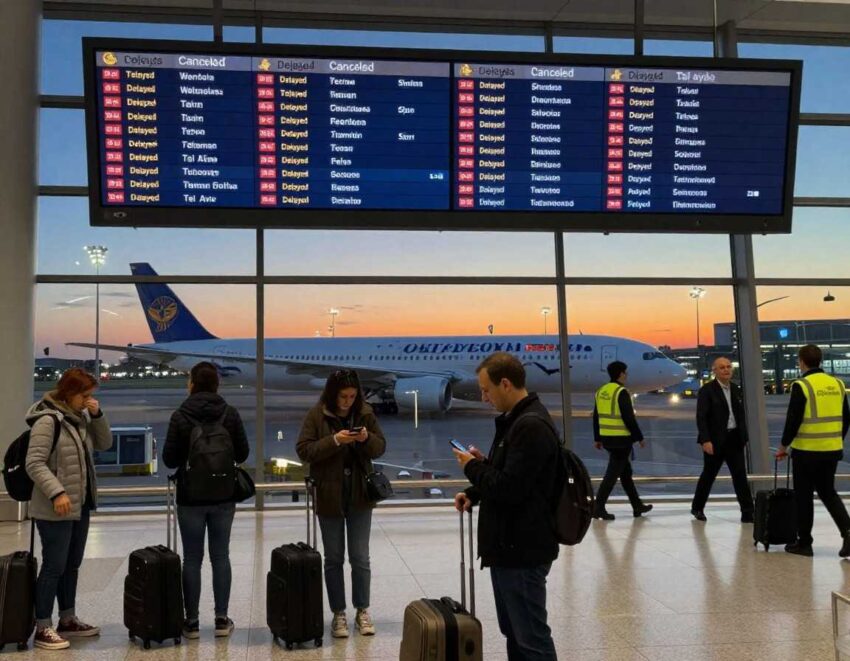
For passengers, flexibility is now key. Many airlines are offering rebooking waivers for affected destinations. Travelers with tickets to Iran, Israel, Lebanon or certain Iraqi cities should monitor airline notifications daily. Direct communication with carriers is essential. Airport departures boards may not reflect changes until shortly before scheduled departure.
The aviation industry is built to respond. But uncertainty remains its greatest cost.
Hilton, Marriott and Accor Brace for Middle East Tourism Shock as Regional Hotels Face Booking Volatility
Hospitality is the next link in the chain. Hotels operate on forward bookings. When governments issue urgent exit warnings, cancellation patterns shift overnight. International chains such as Hilton, Marriott and Accor have strong footprints across the Middle East, including in cities such as Tel Aviv, Dubai, Doha, Riyadh and Istanbul.
Israel welcomed approximately 1.3 million tourists in 2025, with the United States, France and the United Kingdom among its largest source markets. That inbound flow supports hotel occupancy, tour operators and local restaurants. If travel advisories reduce arrivals from Europe and North America, hotel occupancy rates may soften in affected cities.
Iran reported 7.4 million foreign visitors during the Iranian year spanning March 2024 to March 2025. Much of that traffic originates from neighboring countries, but European travelers contribute to cultural and heritage tourism segments. A sustained advisory environment can reduce group travel, academic tours and specialized cultural itineraries.
Hospitality brands typically adopt a calm but cautious approach. They prioritize guest safety. Security protocols increase. Cancellation policies often become more flexible. Event planners may postpone conferences. MICE travel can shift to alternative destinations in the Gulf or Europe.
Yet not all markets decline equally. Gulf hubs such as Dubai and Doha often see stable or even increased transit activity when regional routes adjust. Istanbul may benefit from rerouted long-haul passengers. Mediterranean destinations can attract substitution leisure demand if travelers choose to avoid perceived risk zones.
Tourism does not disappear. It redistributes.
Airlines and Hospitality Navigate Operational Reality as Travelers Reassess Risk and Flexibility
For travelers, practical questions matter more than headlines. Will my flight operate? Is my hotel safe? What if airspace closes?
Airspace closures can occur with limited notice. Airlines typically receive guidance from aviation authorities and implement reroutes or suspensions accordingly. If a flight is canceled, passengers are generally entitled to rebooking or refund depending on jurisdiction and ticket type. European Union passenger rights regulations apply to EU-based carriers departing from the EU.
Insurance coverage requires careful review. Many standard travel insurance policies exclude war or military conflict. Travelers should confirm coverage for cancellation due to government advisories. Flexibility clauses vary.
Travelers currently in Iran or parts of the Middle East covered by advisories should maintain regular contact with their embassy. Registering with diplomatic services ensures updated communication. Avoid public gatherings. Monitor official advisories daily. Keep travel documents accessible. Maintain contingency funds for unexpected accommodation or transport.
Connectivity hubs such as Dubai, Doha and Istanbul remain operational. However, connecting passengers should allow longer layovers to account for schedule variability. Same-day onward connections may carry higher risk during volatile periods.
Short-term volatility does not automatically mean long-term collapse. But awareness is essential.
Regional Tourism Patterns Shift as Source Markets React and Airlines Rebalance Capacity
The United States, France and the United Kingdom represent significant inbound tourism markets for Israel. Poland and Germany also contribute meaningful numbers. If European advisories reduce outbound travel to the region, tour operators specializing in Holy Land pilgrimages, cultural tours and city breaks may experience immediate booking pauses.
Turkey remains a major regional tourism hub. Iran has historically been among Turkey’s important visitor markets. Disruptions in Iran can influence cross-border tourism flows. Iraqi pilgrimage cities have also experienced volatility in the past when Iranian travel slowed due to economic or security concerns.
At the same time, destinations perceived as stable may benefit. Greece, Cyprus and parts of Southern Europe often capture redirected leisure demand. Gulf destinations not directly subject to advisories can maintain strong occupancy due to business travel and transit flows.
Airlines respond dynamically. Capacity may shift toward high-demand routes. Promotional fares may appear to stimulate bookings in unaffected markets. Long-haul carriers with diversified networks are better positioned to absorb shocks.
Hospitality groups monitor occupancy daily. Revenue management teams adjust pricing strategies. Safety communication becomes part of marketing.
Travel resilience depends on adaptability.
Practical Travel Tips for Tourists Amid US–Iran Tensions and European Exit Advisories
Plan conservatively. Avoid tight itineraries. Choose refundable or flexible fares. Confirm hotel cancellation policies before departure.
Monitor official travel advisories from your home country daily. Conditions may change rapidly. Do not rely solely on social media updates.
Keep digital and printed copies of travel documents. Maintain emergency contacts. Carry sufficient funds for unexpected expenses.
If traveling to neighboring countries in the Middle East, verify flight routing. Some itineraries may bypass Iranian airspace entirely, reducing risk of reroute.
Stay informed but avoid panic. Airlines and hotels prioritize safety and regulatory compliance. Decisions to suspend routes are precautionary and often temporary.
Travel remains possible in many parts of the Middle East. However, travelers must weigh necessity against uncertainty.
The Bigger Picture for Airlines, Hotels and Global Tourism
Geopolitical tension tests the travel ecosystem. Airlines manage route complexity. Hotels safeguard guests. Governments balance diplomacy with citizen safety.
The synchronized advisories from the United Kingdom, France, Germany, Italy, Poland, the Netherlands, Sweden, Finland and Serbia represent a significant moment. They send a signal to markets and travelers alike.
Airspace advisories from European aviation authorities underscore operational risk. Military deployments elevate uncertainty. Flight cancellations, even if limited, capture public attention.
Yet the travel industry has navigated similar episodes before. During previous regional escalations, airlines adjusted networks and resumed operations when stability returned. Hospitality brands maintained continuity through enhanced security and flexible booking policies.
For now, vigilance defines the moment. The situation remains fluid. Travelers should make decisions based on official guidance, not speculation.
Tourism is resilient but sensitive. Airlines and hotel groups will continue adapting as events unfold. Travelers who remain informed, flexible and cautious can navigate the uncertainty responsibly.
United Kingdom, France and Germany have urgently advised citizens to leave Iran as US–Iran tensions raise fears of military escalation, airspace closures and sudden flight disruptions. Airlines, hotels and tour operators across the Middle East are now bracing for immediate operational and booking impacts.
The story is still developing. But one message is clear: in times of geopolitical tension, informed travel is safe travel.
The post United Kingdom, France, Germany, Italy, Poland, Netherlands, Sweden, Finland and Serbia Issue Urgent Iran Exit Warning as Lufthansa, British Airways, Air France and Emirates Face Airspace Chaos—Hilton, Marriott and Accor Brace for Middle East Tourism Shock appeared first on Travel And Tour World.
Source: travelandtourworld.com



Sorry, the comment form is closed at this time.