


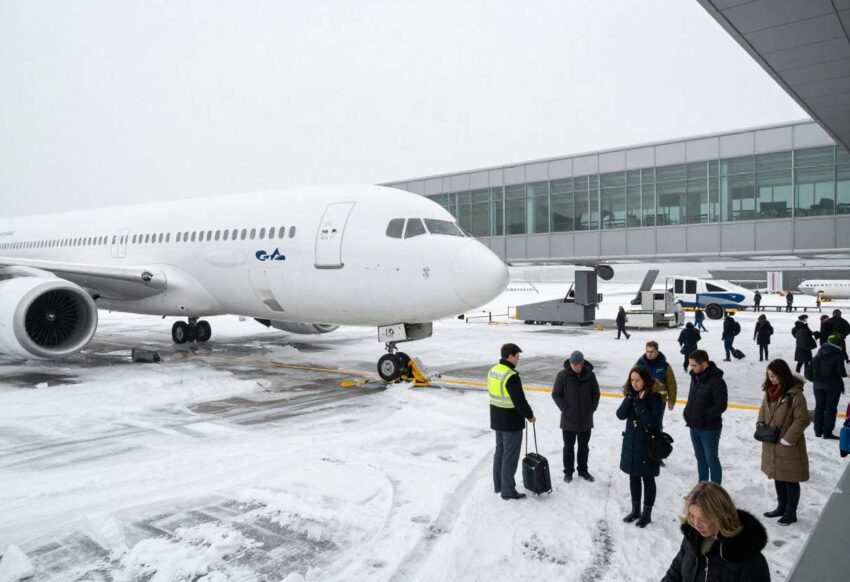
United Kingdom, France, Netherlands, Ireland, and Spain Face Airport Chaos with Hundreds of Flights Canceled Due to Severe Winter Storms: Why You Need to Know About It NOW!
United Kingdom, France, Netherlands, Ireland, and Spain Face Airport Chaos with Hundreds of Flights Canceled Due to Severe Winter Storms: Why You Need to Know About It NOW!
The winter season has caused significant disruption to Europe’s aviation network, with major airports like London Heathrow, Paris Charles de Gaulle, and Amsterdam Schiphol facing widespread cancellations and delays. On February 23, 2026, at least 159 flights were canceled and more than 1,190 flights delayed across various European hubs due to severe winter weather and transatlantic disruptions. These disruptions have affected both short-haul European routes and long-haul transatlantic services, leaving thousands of passengers stranded or facing long delays.
As winter storms bring powerful winds and unstable conditions to Europe, airports are struggling with reduced runway capacity, causing airlines to adjust their schedules, cancel services, and consolidate departures. Passengers flying through the region are facing an increasingly chaotic travel experience, with delays stretching from major European destinations to long-haul international flights. The disruptions have had a ripple effect on connecting flights and airport operations, with delays compounding as crews and aircraft are displaced across various airports.
The Impact of Winter Weather at Major Airports
Among the hardest-hit airports is London Heathrow, one of the busiest hubs in Europe, which has experienced severe operational constraints. The strong winds and snowstorms have significantly reduced runway capacity, forcing airlines to cancel or delay flights as they attempt to manage the reduced air traffic flow. Flight departure boards across the airport are filled with delays, and passengers have reported long queues at check-in counters as airlines scramble to adjust their schedules.
Paris Charles de Gaulle Airport in France has also recorded numerous cancellations, particularly on European connections feeding into long-haul flights. As weather conditions worsen, ground operations at the airport have slowed, leading to further delays. Airlines are struggling to maintain flight schedules as aircraft are delayed in repositioning and operational constraints continue to affect the flow of passengers.
Meanwhile, Amsterdam Schiphol in the Netherlands is facing similar challenges, with weather-related delays and difficulties in managing aircraft movements. The winter system has slowed down ground operations, leading to congestion and frustration among travelers. Passengers traveling to and from Amsterdam are advised to check their flight status frequently, as delays are expected to continue throughout the day.
In Southern Europe, airports like Adolfo Suárez Madrid-Barajas in Spain are also experiencing the ripple effects of disruptions in northern Europe. Even when local weather conditions are more manageable, inbound aircraft delays and crew displacement are having a cascading effect on flight schedules, further compounding the operational challenges.
Severe Weather Impacting Transatlantic Flights
The northeastern United States is also feeling the impact of severe winter weather, which has forced several transatlantic carriers to suspend or delay service. Dublin Airport in Ireland has reported cancellations on U.S.-bound routes, as airlines have been forced to cancel flights due to the extreme weather conditions across the Atlantic. This has contributed to congestion across connecting European hubs, as travelers look to rebook their flights.
Airline Response and Schedule Adjustments
To manage the disruption, several airlines, including easyJet, Finnair, SAS, and other major legacy carriers, have implemented schedule adjustments and rebooking flexibility for affected passengers. However, recovery is expected to take time as aircraft rotations remain out of sequence and airport slots become constrained due to the weather conditions.
Aviation analysts have noted that winter operations across Europe require tight coordination between air traffic control, de-icing teams, and ground handlers. When even a slight reduction in capacity occurs at major hubs, the impact is quickly felt across multiple countries, as flight schedules fall behind and aircraft movements become limited.
As winter storms continue to cause disruptions across Europe, travelers are being urged to check their flight statuses and allow additional time for check-in. With over a thousand delays already recorded and cancellations affecting key hubs, further adjustments remain likely as the winter weather system continues to affect regional airspace.
Travel Advice for Passengers Affected by Delays
Travelers flying within Europe or on transatlantic routes are strongly advised to stay informed by verifying their flight status directly with their airline before heading to the airport. Airlines are offering rebooking options, but availability may be limited as flights continue to be impacted. It’s important to allow extra time for check-in and to monitor any notifications provided by airlines to stay updated on any changes.
For passengers already at airports, it’s recommended to check departure boards frequently and stay in contact with airline representatives for the latest information regarding rebookings or cancellations. With the high number of delays and cancellations, passengers should expect longer wait times at check-in counters and security.
The Bigger Picture: Europe’s Aviation Struggles Amid Severe Weather
These ongoing disruptions highlight the vulnerability of Europe’s aviation network to extreme weather events, particularly during the winter months. When severe weather conditions occur, the region’s busiest airports are put under immense pressure, and the cascading effects on flight schedules and ground operations are felt across multiple destinations.
While airlines are doing their best to manage the situation and minimize the impact on travelers, the complexities of winter operations mean that disruptions could continue for several more hours or even days. The winter system currently affecting Europe shows just how critical it is for airports and airlines to maintain efficient operational systems to mitigate the impact of such weather-related challenges on passengers.
Navigating Winter Disruptions in Europe’s Airports
In conclusion, winter weather and transatlantic disruptions are taking a heavy toll on Europe’s aviation network, with hundreds of flights canceled and more than 1,000 delayed across major hubs such as London Heathrow, Paris Charles de Gaulle, and Amsterdam Schiphol. The operational strain caused by weather constraints and aircraft repositioning challenges has left travelers in a state of uncertainty, with long delays and canceled services compounding the frustration.
As severe winter conditions continue to affect airports across Europe, passengers are urged to stay updated on their flight status and plan accordingly. Airlines are working hard to adjust schedules, but recovery from this disruption will take time. Travelers should expect delays and prepare for potential schedule changes as the winter storm progresses.
The post United Kingdom, France, Netherlands, Ireland, and Spain Face Airport Chaos with Hundreds of Flights Canceled Due to Severe Winter Storms: Why You Need to Know About It NOW! appeared first on Travel And Tour World.
Source: travelandtourworld.com



Sorry, the comment form is closed at this time.