


United Kingdom joins France, India, Mexico, Germany, China, Japan, Australia — Air Canada, WestJet and Porter Could See Ottawa–Montréal Travel Rewired as Alto High-Speed Rail Sparks Vankleek Hill Farm Panic, With Marriott and Hilton Watching Closely
United Kingdom joins France, India, Mexico, Germany, China, Japan, Australia — Air Canada, WestJet and Porter Could See Ottawa–Montréal Travel Rewired as Alto High-Speed Rail Sparks Vankleek Hill Farm Panic, With Marriott and Hilton Watching Closely
United Kingdom joins France and India as part of a powerful wave of international visitors reshaping Canada’s busiest travel corridor, just as a proposed 300 km/h Alto high-speed rail link between Ottawa and Montréal ignites fierce debate in eastern Ontario and draws intense scrutiny from airlines and hotel giants alike. Canada’s tourism sector generated roughly $130 billion in visitor spending in 2024, with more than $31 billion coming from international travelers, according to official national data, and key overseas markets including Mexico, Germany, China, Japan and Australia continue to rebound strongly. At the same time, Air Canada, WestJet and Porter operate dense short-haul networks across Toronto, Ottawa and Montréal—routes that could face structural change if high-speed rail delivers competitive three-hour city-center connections, a threshold that globally has shifted traveler preference away from flights. Yet beyond the boardrooms of airlines and the expansion strategies of Marriott and Hilton, residents in communities such as Vankleek Hill are raising urgent concerns that the proposed alignment may disrupt farmland, maple syrup production and rural livelihoods. The result is a high-stakes collision of global tourism growth, aviation economics and local land anxiety—one that could redefine how millions of domestic and international travelers move through Canada’s economic and cultural heartland in the decade ahead.
United Kingdom Joins France, India, Mexico, Germany, China, Japan, Australia — Air Canada, WestJet and Porter Could See Ottawa–Montréal Travel Rewired
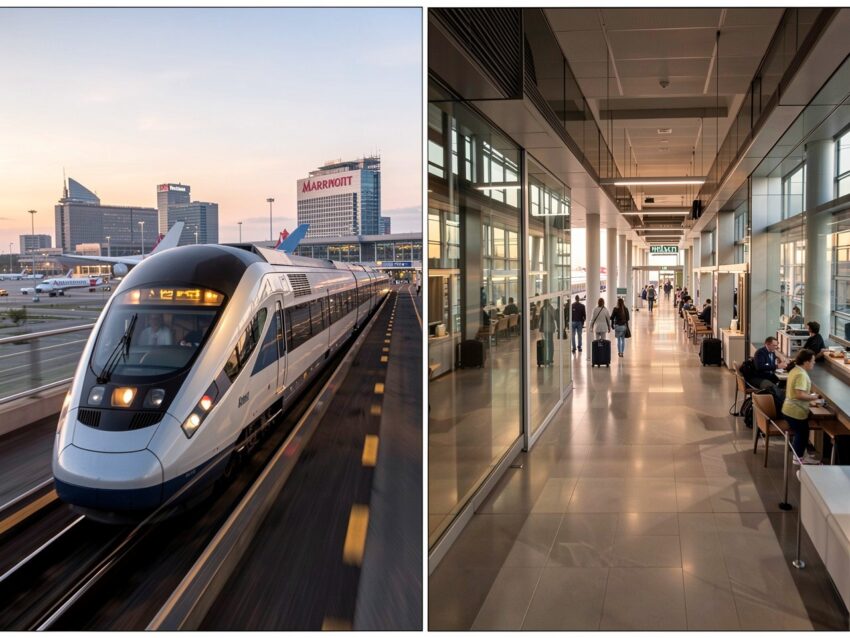
Canada’s proposed high-speed rail corridor between Toronto and Québec City is no longer just a transport story. It is rapidly becoming a tourism, aviation and hospitality conversation with international implications. Travelers from the United Kingdom, France, India, Mexico, Germany, China, Japan and Australia already form a strong share of Canada’s overseas arrivals, according to recent Statistics Canada data. Now, with the federal government advancing plans for the Alto high-speed rail project, capable of reaching speeds of up to 300 km/h, the way visitors move between Ottawa and Montréal could change dramatically. At the same time, residents in eastern Ontario, particularly around Vankleek Hill, are voicing serious concerns that the proposed route may cut through farmland and disrupt agricultural businesses. For tourists, airlines and hotels, the debate is about far more than rail tracks. It is about access, connectivity, competition and experience.
United Kingdom Joins France, India, Mexico, Germany, China, Japan, Australia — Why Global Visitors Matter to Canada’s Corridor
International tourism to Canada continued its recovery momentum through 2024 and 2025. Statistics Canada reported that tourism spending reached approximately $130 billion in 2024, with international visitors contributing over $31 billion in export revenue. The United States remains Canada’s largest source market, but overseas arrivals from the United Kingdom, France, India, Germany, Mexico, China, Japan and Australia have shown steady improvement year over year.
These visitors often land in Toronto Pearson International Airport or Montréal-Trudeau International Airport. Many then travel between Toronto, Ottawa and Montréal within the same trip. This corridor represents Canada’s political, financial and cultural triangle. Ottawa offers Parliament Hill and national museums. Montréal offers world-class cuisine, festivals and European-inspired streetscapes. Toronto offers urban energy and global connectivity.
Currently, travelers rely on short-haul flights, VIA Rail services, rental cars or intercity buses to move between these cities. Air Canada, WestJet and Porter Airlines operate frequent flights between Toronto and Montréal, and between Toronto and Ottawa. Flight time is about one hour. However, total door-to-door travel can stretch longer once airport security and ground transport are included.
If Alto delivers a three-hour rail journey between Toronto and Montréal, as federal announcements suggest is the target, the competitive balance could shift. In markets around the world, high-speed rail that offers city-center to city-center service in under three hours often captures significant market share from airlines. That is not speculation. It is a pattern observed in Europe and Asia.
For international visitors from the United Kingdom, France, Germany or Japan, efficient rail often feels familiar. These travelers frequently use rail at home. A high-speed option could make adding Ottawa or Québec City to a Montréal-Toronto itinerary easier. That translates into more hotel nights and broader tourism distribution.
Air Canada, WestJet and Porter Could See Ottawa–Montréal Travel Rewired — Aviation Faces a New Corridor Dynamic
Air Canada operates multiple daily flights between Toronto and Montréal, and between Toronto and Ottawa. WestJet also serves these routes, while Porter Airlines has expanded its presence significantly in Eastern Canada. Toronto Pearson and Billy Bishop Toronto City Airport both feed this short-haul market.
Flight time between Toronto and Montréal is roughly 1 hour and 15 minutes. Between Toronto and Ottawa, it is about one hour. However, passengers must factor in early arrival at airports, security checks and baggage claim. For business travelers, speed matters. For leisure travelers, cost and convenience matter.
High-speed rail, if priced competitively and scheduled frequently, could appeal to both segments. Airlines may not disappear from the route. Instead, they may reallocate capacity toward longer domestic or transborder routes. Short-haul flights could become less central to airline revenue strategies if rail proves reliable and fast.
For international travelers arriving from London, Paris, Frankfurt, Delhi or Tokyo, airlines may bundle rail connections with long-haul tickets in the future. Intermodal partnerships are common in Europe. Canada could eventually adopt similar models. That could mean landing in Montréal and boarding a high-speed train directly to Ottawa without taking a connecting flight.
For now, flights remain the primary fast link. Air Canada operates wide networks connecting London Heathrow, Paris Charles de Gaulle, Frankfurt, Delhi and Tokyo to Toronto and Montréal. WestJet has strengthened transatlantic operations from Toronto and Calgary. Porter has expanded jet services across North America. These airlines will continue to play a central role in bringing overseas tourists into Canada.
Marriott and Hilton Watching Closely — Hospitality Industry Eyes Multi-City Travel Boom
Hotel groups are watching infrastructure developments carefully. Marriott International, Hilton, Accor and Fairmont all have strong footprints across Toronto, Ottawa and Montréal. Multi-city travel increases average length of stay and total spend per visitor.
Ottawa’s hotel market includes major brands near Parliament Hill and the ByWard Market. Montréal’s hospitality sector is fueled by festivals, gastronomy and conferences. Toronto remains Canada’s largest urban tourism hub.
If rail reduces friction between cities, weekend breaks could expand. A traveler from France might spend three nights in Montréal and add two in Ottawa. A visitor from India might attend a business meeting in Toronto and take a leisure extension to Québec City.
Destination Canada has emphasized the importance of dispersing tourism benefits beyond single gateway cities. Faster rail aligns with that objective. Hotels benefit when travelers do not feel constrained by transport time.
However, the project also faces community resistance. In Vankleek Hill, farm owners fear land disruption and reduced access to forests or agricultural parcels. Their concerns are grounded in uncertainty about the final route alignment. Alto has stated that no definitive path has been selected and that consultation is ongoing. The corporation has also expressed a preference for negotiated land acquisition where possible.
From a tourism perspective, rural authenticity is part of Canada’s appeal. Maple syrup producers, organic farms and countryside experiences contribute to regional character. If infrastructure affects these landscapes, it could influence agritourism narratives.
United Kingdom, France, India, Mexico — What This Means for Global Travelers Planning Canada Trips
For travelers planning trips in 2026 and 2027, Alto remains a future project. Construction timelines suggest phased implementation in the next decade rather than immediate operation. Therefore, tourists should continue planning based on current transport realities.
Flights remain frequent and reliable. Air Canada and WestJet both operate multiple daily departures between Toronto and Montréal. Porter provides additional capacity, particularly appealing to business and short-stay travelers.
VIA Rail currently offers rail service between Toronto, Ottawa and Montréal. Travel times are longer than proposed high-speed benchmarks, but the experience is scenic and comfortable.
Travelers from Germany, Japan or Australia accustomed to high-speed rail should note that Canada’s existing rail network does not yet operate at European or Asian high-speed levels. Planning accordingly avoids disappointment.
Hotel demand in Montréal and Ottawa remains strong during festival seasons and summer months. Early booking is recommended, particularly during major events such as Montréal’s summer festival calendar.
Germany, China, Japan, Australia — Corridor Tourism Growth and Competitive Impacts
International visitors often seek seamless mobility. Statistics Canada data show steady improvement in arrivals from Germany, China and Japan compared with earlier pandemic years. Australia remains a long-haul but high-value market.
High-speed rail could strengthen Canada’s competitiveness relative to other destinations. Multi-city European itineraries are popular because transport is easy. If Canada replicates that ease in its densest corridor, it may enhance appeal for repeat visitors.
Airlines could respond strategically. Reduced short-haul demand might free aircraft for transatlantic expansion or domestic western routes. For travelers, that could translate into more direct long-haul options and potentially competitive pricing.
Hospitality operators could create rail-linked packages. Imagine a bundled Toronto-Ottawa-Montréal cultural itinerary with rail passes and hotel stays. Such products could drive incremental bookings.
Travel Tips for Tourists Navigating the Ottawa–Montréal–Toronto Corridor
Plan flights early, especially in summer. Air Canada and WestJet operate extensive networks, but peak season sees high demand. Porter offers convenient service to central Toronto via Billy Bishop Airport, reducing ground travel time.
Compare rail and air once high-speed schedules are finalized in the future. Door-to-door time often matters more than flight duration alone.
Book hotels in central districts. Proximity to major train stations or airports simplifies connections.
Monitor official government announcements about Alto timelines. The project is evolving, and route consultations continue.
Consider combining cultural city stays with rural experiences. Eastern Ontario’s farmland and maple syrup producers represent authentic regional character.
Eastern Ontario’s Farm Concerns and the Broader Tourism Equation
Residents near Vankleek Hill are not anti-tourism. Their concerns center on land, livelihood and long-term sustainability. Organic cattle, poultry, pork and maple syrup production define local identity.
Infrastructure can stimulate economic growth. It can also create anxiety when details are unclear. Balanced development requires consultation and transparency.
From a tourism industry standpoint, preserving community integrity strengthens destination appeal. Travelers increasingly value responsible travel and sustainability.
Canada’s tourism growth in 2024 and 2025 reflects renewed confidence. High-speed rail could amplify that growth. But success depends on integrating national infrastructure with local voices.
A Corridor at a Crossroads
The United Kingdom joins France, India, Mexico, Germany, China, Japan and Australia as key overseas markets watching Canada’s evolving transport landscape. Air Canada, WestJet and Porter operate the arteries that connect international arrivals to domestic experiences. Marriott, Hilton, Accor and Fairmont provide the beds that transform visits into memories.
Alto’s proposed high-speed rail promises speed, efficiency and a modern travel narrative. Yet in Vankleek Hill, farmers worry about access to forests and fields. The debate is not simply rail versus air. It is connectivity versus community impact.
For tourists, the message is clear. Canada’s Ottawa–Montréal–Toronto corridor remains vibrant and accessible today. Flights are frequent. Hotels are diverse. Experiences are rich. High-speed rail may eventually make it even easier to explore multiple cities in one seamless journey.
United Kingdom joins France and India at a pivotal moment for Canada’s tourism corridor, as the proposed 300 km/h Alto high-speed rail between Ottawa and Montréal promises to reshape travel patterns for millions of global visitors.
While airlines like Air Canada, WestJet and Porter assess competitive shifts, residents in eastern Ontario warn the project could disrupt farmland in Vankleek Hill—turning a transport upgrade into a national debate.
Until then, informed planning, early booking and awareness of evolving infrastructure will ensure a smooth Canadian adventure.
The post United Kingdom joins France, India, Mexico, Germany, China, Japan, Australia — Air Canada, WestJet and Porter Could See Ottawa–Montréal Travel Rewired as Alto High-Speed Rail Sparks Vankleek Hill Farm Panic, With Marriott and Hilton Watching Closely appeared first on Travel And Tour World.
Source: travelandtourworld.com



Sorry, the comment form is closed at this time.