


Unveiling Nagato: A Journey Through Japan’s Coastal Sanctuary and Timeless Traditions
Unveiling Nagato: A Journey Through Japan’s Coastal Sanctuary and Timeless Traditions
A serene escape from the neon-lit corridors of Tokyo and Osaka is found in Nagato, a coastal city nestled in the rugged northern reaches of Yamaguchi Prefecture. Often overshadowed by its more famous neighbours, this “hidden gem” is characterized by a landscape where the emerald mountains of the Chugoku region meet the deep indigo of the Sea of Japan. A synthesis of spiritual heritage, geological wonder, and culinary artistry is offered to those who venture to this edge of the archipelago. In recent years, Nagato has transitioned from a quiet fishing port into a sophisticated cultural hub, balancing ancient legends with a revitalized tourism infrastructure.
Spiritual Grandeur at the Motonosumi Shrine
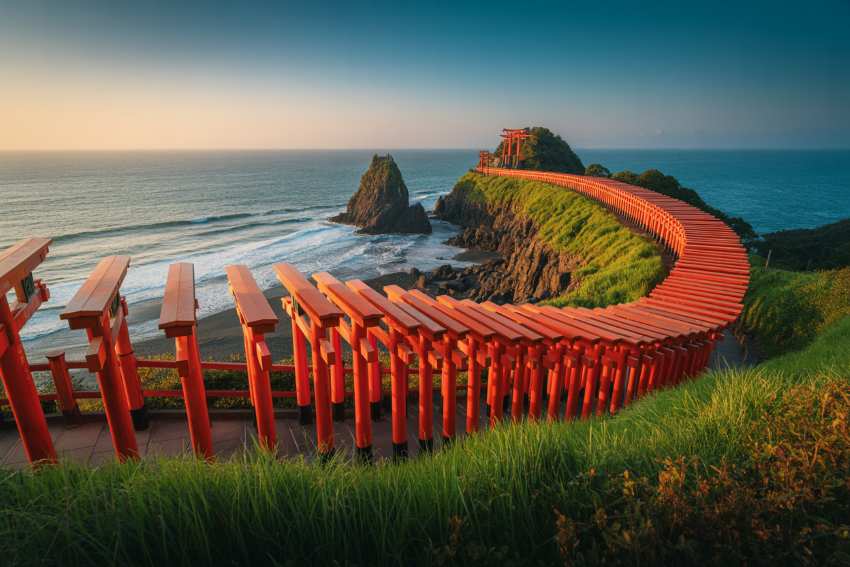
One of the most visually arresting sights in all of Japan is located on the cliffs of Nagato. The Motonosumi Shrine is famed for its 123 vermilion torii gates, which are arranged in a serpentine line winding toward the crashing waves below. While many shrines are built to honour singular deities, this site was established following a divine revelation involving a white fox in 1955. Unlike the more common offering boxes placed at eye level, the box at Motonosumi is perched atop a high torii gate; success in tossing a coin into this box is said to guarantee the fulfilment of one’s wishes. The contrast between the brilliant red gates, the lush green hills, and the sapphire sea has earned the site a reputation as one of Japan’s most beautiful locations.
The Geological Majesty of Omijima: The Alps of the Sea
The dramatic coastline of Omijima Island, connected to the mainland by a soaring bridge, is often referred to as the “Alps of the Sea”. This nickname was originally bestowed by the writer Yokoyama Kenzo in the early 20th century to describe the island’s jagged rock formations and steep sea cliffs. The island is protected as part of the Kita-Nagato Coast Quasi-National Park and can be circumnavigated via sightseeing cruises. These excursions allow for the observation of “elephant rocks”, sea caves, and stone pillars that have been carved over millennia by the relentless erosive forces of the Sea of Japan. For the more adventurous, the underwater world of Omijima is highly regarded by scuba divers, as the island’s unique geology continues beneath the surface, creating tunnels and habitats for rare marine life.
Healing Waters and Ancient Legends at Nagato Yumoto
The therapeutic potential of Nagato’s landscape is perhaps best experienced at Nagato Yumoto Onsen. As the oldest hot spring in the prefecture, its history spans over 600 years, with its discovery attributed to a revelation granted to a Buddhist priest. The town has recently undergone a major aesthetic transformation, blending traditional wooden architecture with modern riverside promenades. In the nearby village of Tawarayama, a more historical form of toji (hot spring therapy) is still practised. This area remains a sanctuary for those seeking long-term recovery, where the quiet rhythm of the village is preserved by local innkeepers who have maintained these healing waters for generations.
Literary Legacy and the Soul of Senzaki
The poetic soul of Nagato is most deeply felt in Senzaki, the birthplace of the beloved children’s poet Kaneko Misuzu. Her work, which often focused on the interconnectedness of all living things, was deeply influenced by the local fishing culture. The Kaneko Misuzu Memorial Museum is housed in her former childhood residence, offering a poignant look at her brief but impactful life. Her poetry often reflected the sombre side of the sea, including the “Kujira-baka”, or whale graves, found in the village of Kayoi. These graves were constructed by 17th-century villagers to honour the souls of whale foetuses, demonstrating a unique spiritual respect for marine life that continues to be commemorated through annual rituals and festivals.
A Culinary Expedition: From Fugu to Garlicky Yakitori
A visit to Nagato is incomplete without exploring its distinct culinary identity. While Yamaguchi Prefecture is synonymous with fugu (pufferfish), Nagato offers a specialized experience focused on freshness and traditional preparation. However, the city is also recognized nationally as a “Yakitori Town”. Unlike the metropolitan versions of these grilled skewers, Nagato-style yakitori is distinguished by the use of onions instead of leeks and a generous dusting of garlic powder. The local Senzaki squid is another delicacy, often served as translucent sashimi that showcases the bounty of the nearby currents. These flavours are best enjoyed in the local izakayas, where the warmth of the community is as palpable as the steam from the grills.
Planning Your Escape to the Northern Coast
The high-speed Shinkansen network, which includes Shin-Yamaguchi Station as its primary gateway, has made it easier to reach this remote paradise. From there, a scenic drive or a ride on the local JR Mine Line reveals a side of Japan largely unaffected by mass commercialisation. Whether seeking the spiritual solitude of a cliffside shrine, the geological wonder of the “Ocean Alps”, or the soothing embrace of an ancient hot spring, Nagato exemplifies the enduring beauty of Japan’s rural landscapes. It is a destination where the tides dictate time and where each visitor is encouraged to find their own hidden treasure.
The post Unveiling Nagato: A Journey Through Japan’s Coastal Sanctuary and Timeless Traditions appeared first on Travel And Tour World.
Source: travelandtourworld.com



Sorry, the comment form is closed at this time.