


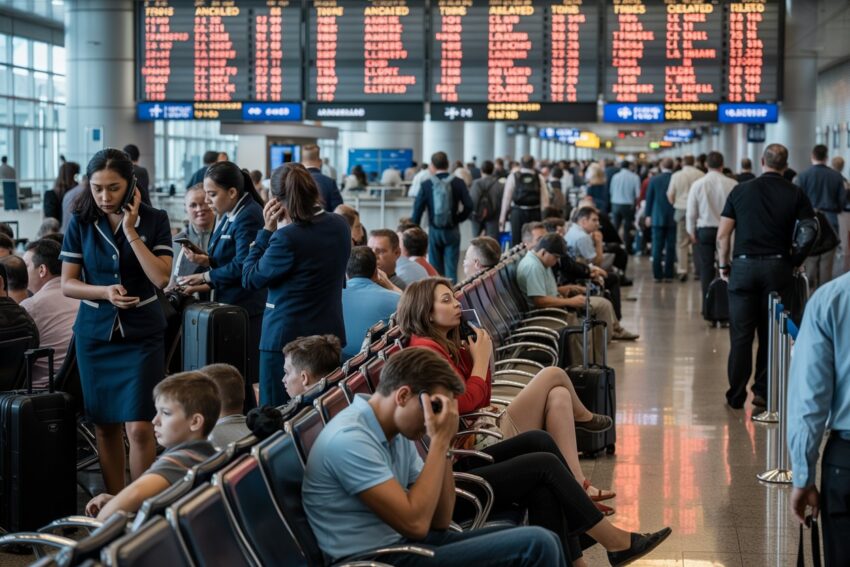
US Tourists in Evacuation Spree as Relaxed Advisory Leaves Mexico Tourism in Doldrums, Triggering Soaring Airfares, Thousands of Stranded Travelers, and Mass Flight Cancellations Across Puerto Vallarta, Cancún, Guadalajara, Michoacán, and Beyond
US Tourists in Evacuation Spree as Relaxed Advisory Leaves Mexico Tourism in Doldrums, Triggering Soaring Airfares, Thousands of Stranded Travelers, and Mass Flight Cancellations Across Puerto Vallarta, Cancún, Guadalajara, Michoacán, and Beyond
In the wake of escalating cartel violence, US tourists are in the midst of an evacuation spree, with the relaxed advisory from the US State Department leading to mass departures from Mexico. The advisory has contributed to Mexico tourism entering a state of crisis, as violence intensifies in key regions such as Puerto Vallarta, Cancún, Guadalajara, and Michoacán. As the unrest continues, soaring airfares and thousands of stranded travelers have compounded the chaos, with mass flight cancellations affecting major airports. The relaxed advisory, which encouraged US tourists to leave affected regions, has escalated the situation, forcing many to scramble for alternative flights and accommodations. With both security concerns and operational disruptions continuing, travelers are facing a highly unpredictable and stressful travel environment.
The Aftermath of “El Mencho’s” Death: Cartel Retaliation and Nationwide Chaos
The killing of “El Mencho”, the notorious leader of the CJNG on February 22, 2026, triggered immediate and widespread retaliation across Mexico. Within hours, the cartel launched coordinated attacks, creating chaos in several states. Over 250 roadblocks were set up across 20 states, using burning vehicles to disrupt critical transportation routes. In Jalisco, the violence escalated further with 25 National Guard members killed in multiple clashes, marking one of the deadliest episodes for Mexican security forces in recent years. Additionally, 30 suspected criminals were killed in Jalisco, with other casualties reported in Michoacán. The violence extended to public infrastructure, including attacks on a Costco and a gas station in Puerto Vallarta, as well as various pharmacies and convenience stores across Guanajuato and Cozumel. These acts of aggression disrupted daily life, leading to mass flight cancellations at airports like Guadalajara and Puerto Vallarta, while public transport was halted and schools were closed in multiple regions. The violent repercussions of El Mencho’s death have instilled fear and uncertainty across the country, impacting both residents and international visitors.
US State Department Advisory on Travel to Mexico Amid Cartel Violence
In response to the escalating cartel violence in Mexico, the U.S. State Department has issued an urgent advisory for American citizens to shelter in place and reconsider non-essential travel to several affected regions. The advisory follows the killing of CJNG leader “El Mencho” and the resulting violence, including roadblocks, shootouts, and airport disruptions. The U.S. government has recommended that travelers in these areas avoid traveling to other cities, remain in safe locations, and closely monitor official updates. As of February 2026, U.S. Embassy personnel have been instructed to work remotely in certain areas, while all U.S. citizens are urged to maintain close contact with the embassy for support. The advisory highlights the ongoing safety concerns in several key tourist destinations in Mexico.
LocationDirectiveGuadalajara (Jalisco)Shelter in place, work remotelyPuerto Vallarta (Jalisco/Nayarit)Shelter in place, work remotelyCancun (Quintana Roo)Shelter in place, work remotelyTijuana (Baja California)Shelter in placeMonterrey (Nuevo Leon)Remain in metropolitan areaMazatlan (Sinaloa)No travel through February 25MichoacánShelter in placeGuerreroShelter in place
This advisory serves as a critical reminder of the ongoing risks in Mexico due to cartel-related violence, prompting American travelers to reconsider or delay their trips until conditions stabilize.
Corporate Responses: U.S. Companies Evacuate Employees Amid Mexico’s Cartel Violence
As cartel violence escalated following the killing of CJNG leader “El Mencho”, several U.S. companies took swift and decisive action to evacuate their employees from Mexico. The crisis prompted evacuations, remote work directives, and operational adjustments across various industries, ranging from tech firms to logistics giants. These companies are prioritizing the safety of their personnel while navigating the uncertainty of the ongoing conflict. Here’s how these companies are responding to the crisis:
Vercel: Swift Evacuation with Contingency Planning
Vercel, a cloud platform company based in San Francisco, was one of the first to respond with a high-profile evacuation of their employee, Andrew Barba, and his wife, who were trapped at Guadalajara International Airport as violence erupted.
Vercel’s leadership team worked tirelessly to book every available U.S.-bound flight from Guadalajara to evacuate the pair.
The company also prepared Plan B and Plan C contingency plans in case no flights could depart.
The evacuation was successful, and the couple landed safely in Dallas, Texas, amidst the chaos. Their story went viral, showcasing Vercel’s quick, effective response and setting an example for other companies in the region.
Kuehne + Nagel: Remote Work for Employees in Affected Regions
Kuehne + Nagel, a global logistics leader, swiftly issued a remote work directive to its employees in regions impacted by the cartel violence.
With the Guadalajara airport facing massive disruptions and cargo operations being delayed, the company adjusted its operations to ensure that logistics services continued while maintaining employee safety.
The company’s decision to shift to remote work in affected areas helped avoid additional risks to personnel and allowed its supply chain operations to adapt to the new challenges posed by the violence.
C.H. Robinson: Managing Freight and Supply Chain Disruptions
C.H. Robinson, one of the largest freight brokerages in the world, reported that freight corridors were severely disrupted due to road blockages and violence in western Mexico.
To ensure the safety of their employees and business continuity, the company implemented measures to reroute shipments and manage logistics disruptions.
C.H. Robinson also noted that many truck drivers were unwilling to enter high-risk areas, creating a shortage of trucking capacity and affecting their operations. Despite these challenges, the company focused on maintaining supply chain resilience while prioritizing employee safety.
Rising Ticket Prices Amid the Cartel Violence Crisis
The ongoing cartel violence in Mexico has not only disrupted travel but also led to a significant increase in ticket prices, especially for flights to and from affected regions. Due to the heightened security measures, operational challenges, and reduced airline availability, prices have surged in recent weeks, leaving travelers facing higher costs. Here are the key factors contributing to this increase:
Flight Cancellations and Limited Availability: With numerous flights canceled, especially by major carriers like American Airlines, Delta, and United, the limited availability of seats has driven up prices.
Demand Surge: As tourists scramble to return home or rebook flights, demand for available seats has pushed prices higher, particularly during high-demand seasons like Spring Break.
Increased Operational Costs: Airlines are facing additional operational costs due to security concerns and logistical delays, which are being passed on to consumers in the form of higher ticket prices.
Route Rerouting: Airlines are rerouting flights due to airport disruptions, which often leads to longer travel times and higher costs for passengers.
Flight Rescheduling Fees: Many airlines are charging higher fees for rescheduling flights, making it expensive for travelers to change their plans in response to the ongoing unrest.
As the violence escalated, several U.S. and international airlines suspended operations to and from Mexico, leaving thousands of travelers stranded. Airlines quickly adapted by waiving rebooking fees and offering flexibility to travelers. Some of the key airline responses include:
American Airlines: Cancelled flights to Guadalajara, Mazatlán, and Puerto Vallarta, ensuring the safety of passengers and crew.
Delta Air Lines: Halted services to affected cities and rerouted flights to avoid conflict zones.
United Airlines: Suspended operations to several impacted areas, helping reduce the number of travelers exposed to potential danger.
Southwest Airlines: Took similar actions, halting services to the worst-hit cities, and prioritizing customer safety.
Air Canada: Suspended flights to Puerto Vallarta, ensuring their passengers were not at risk.
Alaska Airlines: Canceled flights to Puerto Vallarta and Guadalajara, aligning with the safety protocols of other airlines.
US – Mexico Flight Cancellations Due to Cartel Violence and Winter Storms
Between February 22 and 24, 2026, over 370 flights between the U.S./Canada and Mexico were canceled, primarily due to cartel violence following the killing of CJNG leader “El Mencho”. This was further exacerbated by Winter Storm Hernando, which caused additional 11,000+ domestic cancellations in the U.S. The violence disruptions were mainly concentrated in Jalisco, Nayarit, Colima, and Sinaloa states, affecting major tourist destinations like Guadalajara and Puerto Vallarta. Airlines suspended services to these cities, with a total of 400-450+ cancellations over the three days.
DateEstimated Cancellations (US–Mexico Routes)Key TriggerSunday, Feb 22~237+ flightsEl Mencho killed; airlines suspend all service to PVR, GDL, MZTMonday, Feb 23~175+ flightsShelter-in-place orders extended; 40% of PVR flights canceled, 16% of GDL flights canceledTuesday, Feb 24Partial resumption; residual cancellationsAirlines begin cautious restart; waivers still active3-Day Total~400-450+ flights canceled (US/Canada–Mexico)Combined cartel violence + storm disruptions
Most Affected Airports During the Cartel Violence Crisis
The cartel violence in Mexico severely impacted major airports, particularly Puerto Vallarta International Airport (PVR), where 50% inbound and 62% outbound flights were canceled on February 22, 2026. Guadalajara (GDL) followed closely, with 76% cancellations from U.S. carriers. Other airports, like Mazatlán (MZT), Cancún (CUN), and Manzanillo (ZLO), also saw significant disruptions. While Tepic (TPQ) and Manzanillo faced limited cancellations, Cancún managed a partial resumption by February 24. Below is a breakdown of the key affected airports:
AirportCodeSunday (Feb 22) Cancellation RateMonday (Feb 23) CancellationsStatus by Feb 24Puerto VallartaPVR50% inbound, 62% outbound~33 of 82 flights (40%)Partial resumptionGuadalajaraGDL76% (US carriers)26 of 162 flights (16%)Gradual resumptionMazatlánMZTAll American Airlines flights canceledUS Embassy ban through Feb 25Limited operationsCancúnCUN23 cancellations + 40 delaysShelter-in-place active but airport openSituation normalized Feb 24TepicTPQ4 cancellationsLimited serviceMinimal impactManzanilloZLO6 cancellationsLimited serviceWestJet resumed Feb 25
Most Affected Routes (US → Mexico) Due to Cartel Violence
The following table highlights the most disrupted U.S. to Mexico routes, with major cancellations and delays impacting travelers between February 22 and February 24, 2026, due to the cartel violence crisis. Puerto Vallarta and Guadalajara were the hardest-hit destinations, causing significant operational challenges for U.S. airlines. American Airlines, Southwest, and other major carriers were forced to cancel or reroute numerous flights, leaving travelers stranded or delaying their travel plans. The disruptions were compounded by ongoing security concerns and airport closures in affected regions.
RouteAirlines AffectedDisruption LevelDetailsDFW → PVR (Dallas–Puerto Vallarta)American, Southwest Severe30%+ of DFW-PVR flights canceled Sunday; all AA flights canceled Sun-MonLAX → PVR (Los Angeles–Puerto Vallarta)United, Delta, Alaska SevereNear-total shutdown Sunday; recovery flights landed Monday nightDEN → PVR (Denver–Puerto Vallarta)United, Southwest SevereSouthwest canceled 75% of PVR flightsPHX → PVR (Phoenix–Puerto Vallarta)American, Southwest Severe8 cancellations Monday from Sky Harbor alonePHX → GDL (Phoenix–Guadalajara)American High2 cancellations + 1 delay Sunday; 2 cancellations MondayIAH/DFW → GDL (Houston/Dallas–Guadalajara)United, American HighUnited canceled 76% of GDL flights; all AA GDL service halted SundayDFW → MZT (Dallas–Mazatlán)American HighAll service canceled Sunday; Embassy travel ban through Feb 25PHX → MZT (Phoenix–Mazatlán)American High2 cancellations from Sky Harbor on SundayMultiple US cities → CUN (Various–Cancún)Multiple carriers Moderate23 cancellations + 40 delays; airport remained open
Airlines Most Affected by Cartel Violence and Winter Storm Disruptions
The cartel violence in Mexico, combined with the impact of Winter Storm Hernando, caused widespread disruptions in flight operations. U.S. and Canadian airlines saw significant flight cancellations to Puerto Vallarta (PVR), Guadalajara (GDL), and other major Mexican airports. These disruptions were compounded by a simultaneous noreaster hitting the U.S. Northeast, causing further travel chaos. Below is a breakdown of how the airlines were affected:
AirlineCancellation Rate to PVR (Sunday)Mexico Airports AffectedWaiver WindowVolaris95%PVR, GDLRefund or free date changeUnited Airlines76%PVR, GDLThrough Feb 25; rebook by Feb 27Delta Air Lines76%PVR, GDLThrough Feb 25; rebook by Feb 28Southwest Airlines75%PVRThrough Feb 25; rebook within 14 daysAir Canada66%PVRSuspended PVR operations through Feb 24WestJet65%PVR, GDL, ZLO37 flights canceled + 7 divertedAmerican AirlinesAll flights canceledPVR, GDL, MZTThrough Feb 24; rebook by Feb 26Alaska AirlinesAll PVR flights canceledPVRThrough Feb 25Porter Airlines100%PVRFull cancellation Sunday
Ground Report for February 24, 2026: Ongoing Mexico Crisis and Airline Resumption
As of February 24, 2026, airlines are slowly resuming services to Puerto Vallarta (PVR) and Guadalajara (GDL) after the intense cartel violence, although operations remain at reduced capacity. Air Canada, WestJet, Air Transat, Porter, and major U.S. carriers have begun restoring flights, offering a partial return to normalcy for travelers. However, the security toll continues to rise, with 74 fatalities confirmed, including 25 National Guard members, and 70 arrests across seven states. The violence has also led to 83% of 250 road blockades being cleared, and no new blockages have been reported in Jalisco since midnight. While U.S. Embassy shelter-in-place orders remain in effect for Jalisco and Nayarit, Cancún and Mexico City are reported to be fully operational. Despite the easing of some disruptions, analysts are warning of the potential for further violence due to a CJNG power vacuum, which could escalate tensions in the coming days. This report provides detailed insights into airline recovery, airport conditions, and safety advisories for travelers.
As cartel violence escalates, US tourists are facing an evacuation spree due to the relaxed advisory issued by the U.S. State Department. This has left Mexico tourism in a downturn, with soaring airfares, thousands of stranded travelers, and mass flight cancellations across major cities.
Conclusion
US tourists have found themselves in an evacuation spree as the relaxed advisory issued by the U.S. State Department leaves Mexico tourism in a state of crisis. The escalating cartel violence has led to soaring airfares, thousands of stranded travelers, and mass flight cancellations across key destinations such as Puerto Vallarta, Cancún, Guadalajara, Michoacán, and beyond. The situation has not only caused chaos for tourists but also posed significant challenges for the tourism industry in Mexico. With ongoing security concerns and disrupted flight operations, American tourists are reevaluating their travel plans, and many are opting to leave the region sooner than expected. The unfolding crisis highlights the vulnerabilities faced by travelers in politically unstable regions and underscores the need for clear communication and security measures.
The post US Tourists in Evacuation Spree as Relaxed Advisory Leaves Mexico Tourism in Doldrums, Triggering Soaring Airfares, Thousands of Stranded Travelers, and Mass Flight Cancellations Across Puerto Vallarta, Cancún, Guadalajara, Michoacán, and Beyond appeared first on Travel And Tour World.
Source: travelandtourworld.com



Sorry, the comment form is closed at this time.