


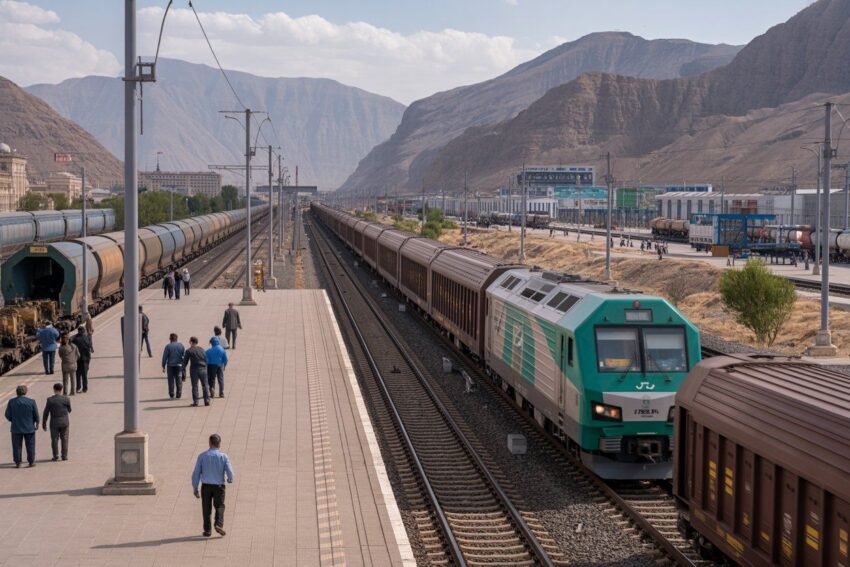
Uzbekistan and Tajikistan boost railway cooperation, expanding cargo transport, enhancing trade, and strengthening regional connectivity for economic growth
Uzbekistan and Tajikistan boost railway cooperation, expanding cargo transport, enhancing trade, and strengthening regional connectivity for economic growth
Uzbekistan and Tajikistan have significantly boosted their railway cooperation, allowing for more frequent freight traffic across their shared border. As part of the new initiative, over six pairs of cargo trains will now be processed daily at key border checkpoints, a move designed to accommodate the growing demand for cross-border shipments. These enhanced rail operations aim to deepen the economic connection between the two nations.
In high-level discussions between Uzbekistan Railways’ Chairman Zufar Narzullayev and Tajikistan Railways’ head Komil Jumakhon, both parties agreed on strategies to expand the overall freight transport capacity. This includes speeding up cargo handling at border stations and streamlining procedures to overcome previous bottlenecks, ensuring faster, more predictable, and cost-efficient cargo movement for businesses in both countries.
Rising Bilateral Trade Drives the Rail Expansion
The expansion of rail operations coincides with the remarkable growth of trade between Uzbekistan and Tajikistan. In 2025, their trade turnover reached an impressive $912.3 million, marking a notable increase from previous years. This surge in economic exchange underscores the strategic importance of improved transport corridors in facilitating greater cross-border trade.
Uzbekistan’s broader foreign trade activities reflect a similar upward trajectory. The country’s total foreign trade turnover reached a record high of $81.2 billion in 2025, a growth of 20.7% compared to the previous year. Notably, its exports alone grew by 24%, reinforcing Uzbekistan’s position as a key trade partner within the region and globally.
For Tajikistan, the trade increase is in line with broader economic trends. Official reports show that Tajikistan’s total trade volume grew by approximately 14% in 2025, driven by increasing import and export activities. The synergy between the two countries’ expanding trade relations emphasizes that rail infrastructure improvements are not isolated events but vital components of their growing economic integration.
Infrastructure Overhaul: Investments in Rail Capacity and Efficiency
Both Uzbekistan and Tajikistan are investing heavily in the modernization of their rail infrastructure to improve efficiency and handle increased volumes of freight. This includes refurbishing aging tracks, implementing advanced signaling systems, and developing cutting-edge logistics facilities to manage larger cargo loads.
Uzbekistan, in particular, has focused on its role as a regional transport hub, with trade links now extending to over 210 countries. Upgrading its rail infrastructure ensures the country maintains its competitive edge in regional and global trade by improving transit times and supporting smoother logistical operations.
For Tajikistan, upgrading its rail network is crucial due to its landlocked status. The enhanced connectivity through Uzbekistan’s modernized transit network opens doors to broader markets beyond Central Asia, facilitating trade with neighboring regions and reducing reliance on expensive transport options like air freight.
Economic Growth, Job Creation, and Expanding Trade Networks
The ramp-up in rail operations will have a profound impact on both countries’ economies. Key sectors such as agriculture, manufacturing, and energy will benefit from improved logistics, enabling goods such as cotton, minerals, food products, and industrial materials to be transported more effectively across borders.
The expansion of the rail network will also create a significant number of jobs. In both Uzbekistan and Tajikistan, new employment opportunities in construction, rail operations, and logistics will emerge, stimulating local economies and contributing to broader regional development.
Furthermore, improved rail links will open new markets for Central Asian products, facilitating the efficient movement of goods to potential partners and creating more robust trade networks. This, in turn, strengthens the ability of Uzbekistan and Tajikistan to engage in emerging multimodal transportation initiatives linking Asia with Europe.
Diplomatic Benefits and Regional Integration
While the main focus of the railway cooperation is economic, the initiative also fosters closer diplomatic and strategic ties between Uzbekistan and Tajikistan. The two countries have long acknowledged the importance of regional cooperation and mutual development, and this rail partnership is a clear demonstration of their commitment to building stronger bilateral relations.
Central Asia’s Broader Connectivity Strategy
The rail expansion between Uzbekistan and Tajikistan is part of a larger regional effort to enhance Central Asia’s role as a key transport and logistics hub. Similar initiatives, such as efforts by Kazakhstan and Uzbekistan to increase rail freight volumes to 60 million tons annually, demonstrate the region’s focus on building a logistics-driven economy.
These initiatives underscore the shift towards improving regional connectivity and integration, facilitating faster cargo movement, reducing logistics costs, and enabling more seamless participation in international supply chains. The Uzbekistan-Tajikistan railway project sets a positive example for more extensive regional projects that could involve additional countries and broaden trade routes across Central Asia.
Conclusion: Railways as Catalysts for Regional Economic Transformation
The expanded railway cooperation between Uzbekistan and Tajikistan is a crucial step in enhancing economic growth, fostering regional cooperation, and improving connectivity. Through daily freight trains, upgraded infrastructure, and enhanced diplomatic ties, both nations are laying the groundwork for sustained regional integration and broader economic development.
As Central Asia continues to develop as a pivotal player in global trade, initiatives like the Uzbekistan-Tajikistan rail project will serve as key drivers of growth, creating more interconnected and prosperous markets across the region. This partnership is not just about improving logistics; it is about paving the way for a more integrated, stable, and economically vibrant Central Asia.
The post Uzbekistan and Tajikistan boost railway cooperation, expanding cargo transport, enhancing trade, and strengthening regional connectivity for economic growth appeared first on Travel And Tour World.
Source: travelandtourworld.com



Sorry, the comment form is closed at this time.