


Vietnam Launches Ambitious Hà Nội Traffic Solutions to End Urban Congestion, Transform Public Transport, and Revolutionize Mobility and Travel – New Update You Need to Know
Vietnam Launches Ambitious Hà Nội Traffic Solutions to End Urban Congestion, Transform Public Transport, and Revolutionize Mobility and Travel – New Update You Need to Know
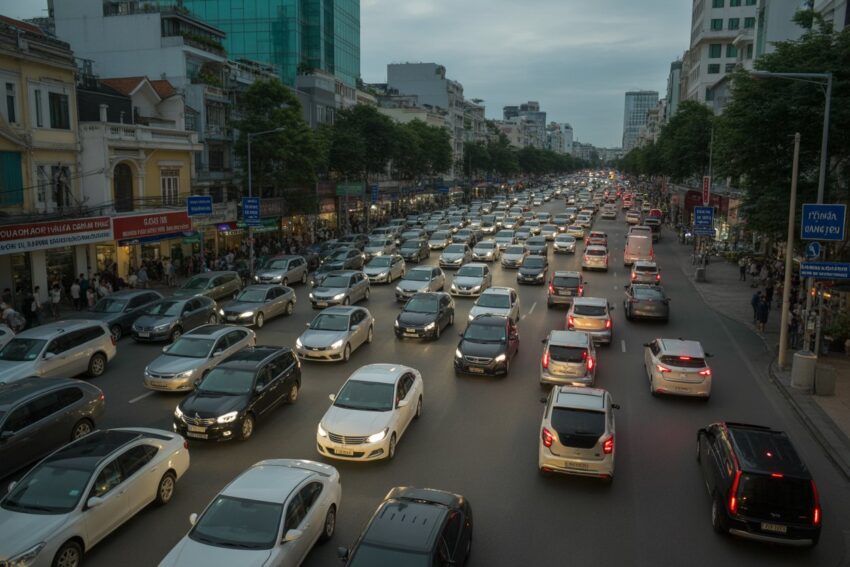
Hà Nội is taking bold steps to tackle one of its most pressing challenges: traffic. According to Vietnam latest news, the city is facing skyrocketing congestion, fueled by surging private vehicle ownership and heavy commuter flows from neighboring provinces. The Department of Construction has introduced a set of Hà Nội traffic solutions, designed to reduce gridlock, improve air quality, and make commuting smoother for residents. These measures aim to transform mobility in the city, combining technology, policy, and sustainability to address both short-term congestion and long-term urban growth.
Rising Traffic and Infrastructure Strains
Hà Nội’s population now exceeds 8.7 million, growing at nearly 1.96% annually, but transport development hasn’t kept up. The imbalance has created serious urban congestion, especially during peak hours.
Private vehicle ownership increases 4–5% annually, with cars alone rising over 11%.
Motorcycles dominate, making up 72.3% of the total fleet, which now exceeds 9.2 million vehicles.
Inter-district roads are only 43.51% complete, and land for transport grows by just 0.3–0.35% per year.
Peak traffic pressure is concentrated:
Morning: 7:30–8:30 a.m.
Evening: 5:30–6:30 p.m.
Around 27% of daily trips happen during these two hours.
Hà Nội also absorbs 1.45 million trips daily from nearby provinces like Bắc Ninh, Hưng Yên, and Vĩnh Phúc. About 22% of these trips cover 50–80 km, putting enormous stress on ring roads and city gateways.
Economic and Environmental Impacts
Deputy Director Đào Việt Long warns that congestion isn’t just about inconvenience—it’s a barrier to economic development and a threat to the city’s environment:
Logistics costs now consume 16.8% of GDP, hampering productivity and competitiveness.
Traffic bottlenecks contribute to poor air quality and diminish residents’ quality of life.
Freight inefficiency is rampant, with 70% of container trucks returning empty, wasting road capacity.
The combination of clogged roads and inefficient logistics underscores the need for better traffic management and more reliable transport solutions.
Challenges in Public Transport
Despite significant investment, public transport in Hà Nội struggles to attract riders:
Buses take up to 43 minutes on routes motorcycles cover in 20 minutes.
Around 70.6% of inner-city trips are under six kilometers, ideal for walking, cycling, or bus travel.
Poor last-mile access: 40% of bus passengers walk more than 500 meters to reach stops.
Interprovincial passenger routes also face challenges. Short-distance services are weak, often requiring operators to combine cargo and passenger transport to remain profitable, while only long-haul services and larger enterprises maintain consistent operations.
Technology Takes the Driver’s Seat
Since there’s limited room to expand roads, smart mobility has become central to Hà Nội traffic solutions. The city plans to leverage technology to manage traffic more efficiently:
Intelligent traffic signals will adapt in real time to reduce congestion at busy intersections.
An integrated traffic data platform will centralize information across government agencies for faster decision-making.
Interoperable digital ticketing will allow residents to access buses, metro lines, ride-hailing, and public bicycles through one platform.
These measures aim to reduce dependence on private vehicles while promoting smoother, on-demand travel.
Sustainable Transport Initiatives
The city is pairing tech with eco-friendly strategies to lower emissions and encourage healthier mobility habits:
Implementing zones where private vehicles are limited by emissions or congestion levels.
Introducing public bicycle programs and shared electric motorbikes around metro stations and high-density areas.
Establishing feeder bus routes to connect neighborhoods with main transit corridors like metro lines and BRT routes.
Adding dedicated bus lanes on radial roads and Ring Roads 1, 2, and 3 where feasible.
By focusing on trips of 500 meters to one kilometer, these initiatives offer practical alternatives to motorcycles and incentivize sustainable transport.
Optimizing Freight and Logistics
Hà Nội also addresses cargo movement inefficiencies:
Creating hubs to link long-haul and short-haul freight, keeping large trucks out of city centers.
Reducing empty-trip rates to maximize infrastructure use.
Streamlining logistics with better traffic management and coordination.
These actions aim to reduce congestion while improving the efficiency of goods transport across the city.
Legal and Regulatory Support
A unified legal framework is essential to the success of Hà Nội traffic solutions:
Rules on traffic data sharing will strengthen inter-agency coordination.
Transport management policies will be adapted to the city’s infrastructure and commuter patterns.
Transit-oriented development (TOD) will ensure public transport forms the backbone of urban growth.
Large projects will be required to conduct traffic impact assessments to prevent future congestion.
These regulations are intended to create a cohesive ecosystem where technology, policy, and infrastructure work together.
Looking Ahead: A More Livable Hà Nội
Hà Nội traffic solutions aren’t just short-term fixes—they’re part of a vision for a city that moves efficiently and sustainably:
Reducing dependence on private vehicles and alleviating urban congestion.
Improving air quality and promoting sustainable transport.
Enhancing reliability and convenience of public transport.
Encouraging walking, cycling, and shared mobility for short trips.
Streamlining freight systems through smart traffic management.
By blending smart mobility, environmental initiatives, and forward-thinking urban planning, Hà Nội is positioning itself as a model for other fast-growing cities in Vietnam. Residents can expect smoother commutes, cleaner air, and a more connected urban environment thanks to these comprehensive measures.
Ultimately, Vietnam latest news highlights that Hà Nội traffic solutions represent a government-led strategy designed to make urban mobility safer, greener, and more efficient, while boosting the city’s socio-economic potential and quality of life.
Key Points
Hà Nội’s vehicle fleet exceeds 9.2 million, with motorcycles dominating 72.3%.
Peak hours see 27% of daily trips, compounded by 1.45 million interprovincial trips.
Public transport remains slow and poorly connected, discouraging commuters.
Smart mobility initiatives include digital ticketing, real-time signals, and integrated data systems.
Sustainable options: bike-sharing, electric motorbikes, dedicated bus lanes, and restricted vehicle zones.
Freight optimization and TOD policies improve efficiency and reduce congestion.
Hà Nội traffic solutions combine technology, policy, and sustainability to reduce urban congestion, enhance public transport, and modernize city living.
The post Vietnam Launches Ambitious Hà Nội Traffic Solutions to End Urban Congestion, Transform Public Transport, and Revolutionize Mobility and Travel – New Update You Need to Know appeared first on Travel And Tour World.
Source: travelandtourworld.com



Sorry, the comment form is closed at this time.