


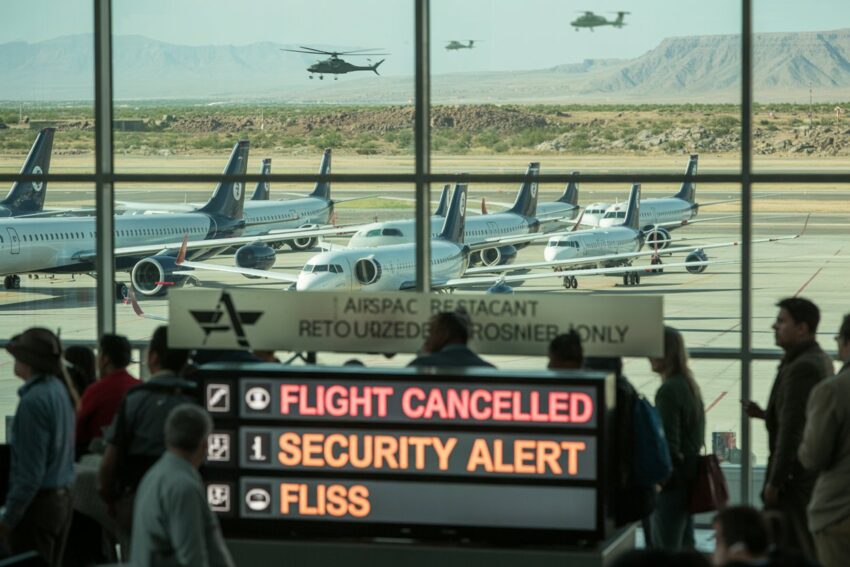
What Happened at El Paso International Airport: FAA Shutdown Order, Security Concerns, and the Rapid Reversal
What Happened at El Paso International Airport: FAA Shutdown Order, Security Concerns, and the Rapid ReversalEl Paso
A Sudden FAA Order That Shocked Travelers and Airlines
El Paso International Airport (ELP), one of the most important transportation hubs in West Texas, recently became the center of national attention after an unexpected Federal Aviation Administration (FAA) decision briefly disrupted all flight activity.
The FAA issued an abrupt order that effectively shut down flights arriving at and departing from El Paso International Airport. The order was reportedly set for a duration of ten days and applied broadly to nearly every form of aviation activity, including commercial passenger operations, cargo flights, and general aviation.
Such sweeping restrictions are extremely rare for a U.S. civilian airport, particularly one serving a major border region where air connectivity supports both tourism and economic movement.
For travelers, the disruption felt immediate. Flight cancellations and diversions triggered confusion across the terminal, leaving passengers stranded and forcing airlines to adjust schedules on short notice.
Understanding the Restricted Zone: A 10-Nautical-Mile Airspace Lockdown
According to reports surrounding the incident, the FAA’s restriction covered airspace within approximately a 10-nautical-mile radius around El Paso, extending into nearby areas including Santa Teresa, New Mexico.
This temporary restriction zone was not described as a routine operational closure caused by weather, runway repairs, or technical issues. Instead, it was framed under “special security reasons,” a vague but serious classification that heightened concern among travelers and officials alike.
Because El Paso sits close to the U.S.–Mexico border, its airspace has strategic sensitivity. It borders Ciudad Juárez, Mexico, and operates within a region where military, customs enforcement, and aviation systems often overlap.
Why Flights Were Grounded: Security Concerns Without Clear Explanation
The FAA did not initially provide detailed public justification for the shutdown, which contributed significantly to the chaos.
Passengers and airlines were reportedly left without a clear understanding of what threat had triggered such an extreme decision. The lack of explanation created uncertainty, particularly because the shutdown was not limited to a few hours but initially described as a multi-day restriction.
Airport disruptions on this scale are typically associated with major national emergencies, severe aviation threats, or defense-related operations. This made the event especially alarming to the local community, which relies on El Paso International Airport as a critical connection point for both business and leisure travel.
The FAA Reversed the Shutdown Within Hours
Despite the initial ten-day timeline, the FAA reversed the closure surprisingly quickly. Within hours of the shutdown order being issued, the agency lifted the restriction and announced that flights could resume.
Officials stated that there was no ongoing threat to commercial aviation. This allowed El Paso International Airport to reopen and return to normal operations shortly after the disruption began.
The speed of the reversal suggested that the restriction may have been precautionary or connected to a short-lived security incident that was resolved quickly.
However, the sudden shift raised further questions, particularly because travelers had already experienced cancellations and delays, and local authorities had already expressed frustration at the lack of communication.
Why This Incident Was Highly Unusual in U.S. Aviation
The El Paso airport shutdown gained attention because it was not a routine airport disruption. Several factors made it stand out as one of the most unusual aviation incidents in recent years.
National Defense Airspace Classification
One of the most significant details was that the restricted zone was reportedly classified as national defense airspace. This is a powerful designation that implies heightened federal security authority and potentially allows defense measures if an aircraft is perceived as an imminent threat.
Such restrictions are typically associated with sensitive military operations or high-level security events, not everyday civilian airports.
No Advance Warning for Local Officials
Perhaps the most controversial aspect of the situation was the lack of coordination. Local leaders reportedly said they were not warned in advance, and airlines were forced to respond in real time.
For an airport serving a major city and border economy, this kind of surprise restriction created unnecessary panic and operational confusion.
Passenger Disruption and Community Anxiety
Even though the restriction lasted only a short time, the immediate impact on passengers was significant. Flights were diverted, travel plans collapsed, and the public was left unsure whether the shutdown was connected to a serious security threat.
This is particularly important in aviation, where confidence and transparency play a major role in maintaining public trust.
The Drone Security Factor: A Likely Trigger
Although full official details were limited, some transportation officials suggested that the incident may have been connected to drone-related security concerns.
In recent years, drone activity near airports and military installations has become an increasing challenge worldwide. Airports are vulnerable to unauthorized drone flights, which can interfere with takeoffs and landings, trigger radar alerts, and pose risks to aircraft safety.
El Paso’s location near Fort Bliss, one of the largest U.S. Army installations, adds another layer of security sensitivity. If counter-drone operations were underway, it could explain why the FAA took such rapid action to temporarily restrict airspace.
While the exact nature of the threat remains unclear, the incident reflects how drone risks are now being treated as major aviation security concerns, especially near strategic border zones.
El Paso’s Border Location Adds Complexity to Airspace Management
El Paso’s geography plays a key role in why this event was treated with heightened urgency.
The airport sits in a region shaped by cross-border movement, defense infrastructure, and international security dynamics. This creates an environment where civilian air traffic must coexist with military operations and border enforcement activities.
When security concerns arise in such a region, aviation authorities may respond more aggressively than they would in other parts of the United States.
However, the El Paso incident also demonstrates how difficult it is to balance national defense priorities with the predictable, reliable functioning of civilian transportation systems.
Impacts on Travelers and Tourism Confidence
Even brief aviation disruptions can create major ripple effects for tourism and local economies.
Immediate Passenger Effects
The temporary shutdown resulted in:
canceled flights
diverted aircraft
stranded passengers
disrupted travel itineraries
missed business meetings and connections
For travelers, the biggest challenge was uncertainty. When airports are shut down without clear information, passengers are left unable to make alternative plans.
Economic Consequences for the Region
El Paso International Airport supports not only tourism but also regional commerce. Cargo and logistics operations play an important role in border trade, and even short disruptions can affect time-sensitive supply chains.
Hotels, rental car services, and hospitality businesses can also experience sudden cancellations when flight schedules collapse.
Tourism Image and Perception
For international and domestic visitors, airports represent the gateway to a destination. Sudden shutdowns can affect how travelers perceive a region’s stability and reliability.
While El Paso remains a safe and important travel destination, incidents like this can shape public perception, especially when they involve security language and defense-level restrictions.
A Broader Warning Sign for Global Aviation Security
The El Paso airport shutdown reflects a growing global challenge: modern aviation systems are increasingly influenced by security threats that can emerge rapidly and without warning.
Security vs. Civil Aviation Stability
The incident highlights the growing tension between two priorities:
protecting airspace from emerging threats
maintaining predictable civilian travel operations
In today’s aviation environment, a sudden threat assessment can disrupt thousands of passengers within minutes, even if the danger is later downgraded.
The Need for Better Coordination
A major lesson from this event is that communication matters as much as security response. Local authorities and airport management must be informed quickly, and airlines must be able to relay accurate information to travelers.
Without clear messaging, disruptions can quickly lead to fear, rumors, and unnecessary public anxiety.
Drone Threats Will Shape Future Aviation Policy
The suspected drone-related context suggests that airports near strategic military or border areas may face more frequent restrictions in the future.
As drone technology becomes cheaper and more accessible, aviation authorities may increasingly rely on temporary airspace closures and defense-based restrictions to prevent risk.
This could become a new reality for airports in sensitive regions worldwide.
What Officials and Local Leaders Said About the Incident
Following the shutdown, local leaders reportedly expressed strong concern and frustration.
Many described the situation as unprecedented, especially due to the lack of advance notice. Lawmakers and city officials called for transparency and better coordination from federal agencies.
Their criticism reflects a broader concern: communities need to understand why disruptive decisions are made, particularly when those decisions affect public safety, tourism, and regional economies.
What This Means for Future Travelers Flying Through El Paso
For travelers, the key takeaway is that El Paso International Airport is operating normally, and the FAA has confirmed there was no continuing threat to commercial aviation.
However, the incident may serve as a reminder that modern travel can be impacted not only by weather or technical issues, but also by security operations that unfold quickly behind the scenes.
Passengers traveling through border-region airports may want to remain flexible with itineraries, especially during periods of heightened security activity.
A Border Airport Incident That Highlights Aviation’s Changing Reality
The FAA’s sudden shutdown of El Paso International Airport and its rapid reversal may have lasted only hours, but the significance of the event goes far beyond a short-term disruption.
It exposed how quickly civilian aviation can be affected by national defense decisions, how vulnerable airports are to emerging drone threats, and how essential communication is to maintaining public confidence.
As global aviation security evolves, incidents like El Paso may become more common, especially in strategically sensitive regions. For the tourism industry, the event serves as a reminder that connectivity is not only about infrastructure and flight schedules, but also about trust, transparency, and stability.
Ultimately, El Paso’s experience reflects a growing reality in modern travel: airports are not just transportation hubs, but frontline spaces where security and tourism intersect in increasingly complex ways.
The post What Happened at El Paso International Airport: FAA Shutdown Order, Security Concerns, and the Rapid Reversal appeared first on Travel And Tour World.
Source: travelandtourworld.com



Sorry, the comment form is closed at this time.