


Which is the Best Way to Reach the UK’s Hidden Islands, Train or Ferry? The Ultimate Travel Faceoff!
Which is the Best Way to Reach the UK’s Hidden Islands, Train or Ferry? The Ultimate Travel Faceoff!
The United Kingdom, with its diverse landscapes and rich history, offers some of the most captivating travel destinations for those seeking adventure and nature. One of the best ways to explore these places is by combining scenic train journeys with ferry crossings. This mode of travel allows adventurers to experience both countryside views and coastal beauty, making the journey itself part of the adventure. Three prime examples of such destinations are the Isle of Arran, Isle of Bute, and the Orkney & Shetland Isles. Each of these destinations is connected to the mainland via both train and ferry routes, offering travellers the chance to enjoy two different forms of transport while witnessing the best of the UK’s natural beauty.
This article will compare train and ferry travel for these routes, examining various factors like price, scenic views, comfort, accessibility, and time, while offering valuable insights into what to expect during the journey.
Isle of Arran: Scotland’s Adventure Island
Getting There by Train and Ferry
The Isle of Arran is easily accessible from Glasgow through a combination of train and ferry services. To begin the journey, travellers board a ScotRail train from Glasgow to either Ardrossan Harbour or Troon, both of which are well-connected to the ferry terminal. The train ride offers a scenic experience through the lush countryside and coastal areas of western Scotland. From Ardrossan or Troon, passengers board a Caledonian MacBrayne (CalMac) ferry that departs for Brodick on the Isle of Arran. The ferry crossing typically lasts between 55 minutes to 1 hour 20 minutes, offering beautiful views of the Firth of Clyde and nearby islands.
Scenic Journey Highlights
Train Travel: The train journey offers continuous views of rolling hills, farmlands, and coastal landscapes. The West Highland Line is particularly celebrated for its dramatic mountain scenery. As the train nears the ferry terminal, passengers can see the landscape transition from green expanses to the shores of the Clyde Estuary. This provides a great opportunity to appreciate Scotland’s countryside before the ferry ride begins.
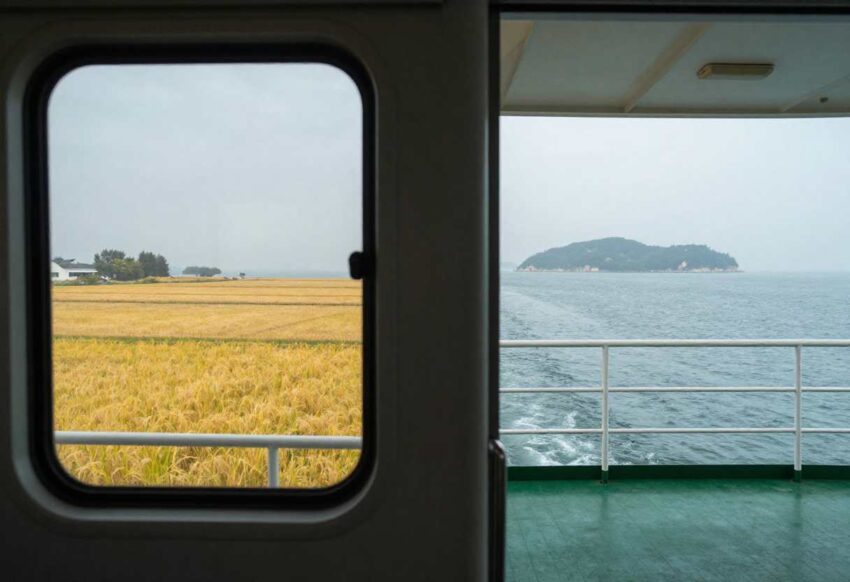
Ferry Crossing: Once on the ferry, passengers are treated to an entirely different view — the open sea. Walking on deck and feeling the sea breeze as you approach Arran enhances the adventure, offering panoramic views of the sea, islands, and coastlines. The transition from land to sea is not only visually stimulating but provides an immersive, relaxing experience.
What to Expect on the Isle of Arran
Outdoor Activities: Arran is known for its diverse landscapes, offering activities like hiking, cycling, wildlife watching, and coastal walks.
Village Exploration: Brodick, the main town, has shops, cafés, and pubs, allowing visitors to experience local culture.
Scenic Diversity: Arran offers a concentrated experience of Scotland’s beauty, from the hills of Goat Fell to the beaches along the coast.
Train vs Ferry Comparison for Arran
Train Travel: The train offers a ground-level perspective of the rolling hills, farmland, and coastline as it nears the ferry terminal. This provides a relaxed, comfortable way to appreciate the countryside.
Ferry Travel: The ferry offers a panoramic open-sea view, providing an immersive experience in nature as passengers feel the sea breeze and experience the transition from land to water.
Isle of Bute: A Scenic West Coast Adventure
Getting There by Train and Ferry
The Isle of Bute is another island easily reached by train and ferry. The journey begins with a train ride from Glasgow to Wemyss Bay, located on the Firth of Clyde. This route provides breathtaking views of the rolling countryside and river valleys. After reaching Wemyss Bay, passengers transfer to the Caledonian MacBrayne ferry for a quick crossing to Rothesay on Bute. The ferry ride lasts about 35 minutes and offers expansive views of the Clyde Estuary and nearby islands.
Scenic Journey Highlights
Train Travel: The train journey offers spectacular views of the lush green countryside and riverside areas. The Wemyss Bay railway station, ranked as one of the most beautiful small stations in the UK, adds charm to the trip.
Ferry Crossing: The ferry ride offers expansive views of the Clyde Estuary, passing by smaller islands and sandy shorelines. The short crossing offers a tranquil and scenic transition to the island.
What to Expect on the Isle of Bute
Outdoor Activities: The West Island Way, a 30-mile walking route, combines moorland, forest, farmland, and shoreline in a continuous trek across the island.
Beaches and Wildlife: Long sandy beaches and coastal walks offer peaceful spots for relaxation and exploration.
Heritage and Villages: Rothesay, the main village, offers heritage sites, cafés, and local shops, making it an ideal spot for tourists looking to enjoy both nature and history.
Train vs Ferry Comparison for Bute
Train Travel: The train journey offers comfortable views of the countryside, rivers, and the coast, allowing passengers to enjoy the beauty of the land as they travel towards the ferry terminal.
Ferry Travel: The ferry crossing is short but scenic, offering sea breezes and expansive water views. It’s a relaxing way to unwind after the train journey, providing a refreshing contrast with the open water.
Orkney and Shetland Isles: Remote Northern UK Adventure
Getting There by Train and Ferry
The Orkney Isles and Shetland Isles are located in the far north of the UK and are accessible via a combination of scenic train journeys and ferry crossings. The journey begins by taking the train from Aberdeen or Thurso through the Far North Line, passing through pine forests, farmland, and coastal vistas. From Aberdeen, trains connect to ferry terminals where passengers can board NorthLink Ferries to Kirkwall (Orkney) or Lerwick (Shetland). The ferry ride provides longer sea crossings, allowing passengers to enjoy panoramic sea views and dramatic ocean horizons.
Scenic Journey Highlights
Train Travel: The Far North Line offers some of the most scenic rail routes in Scotland, providing passengers with coastal views, remote farmland, and pine forests. The route is celebrated for its natural beauty and offers expansive views of the surrounding landscapes.
Ferry Crossing: Once onboard, ferries to Orkney and Shetland offer dramatic sea views with opportunities to spot seabirds and admire the rugged coastline. The longer ferry journey provides a sense of isolation and an immersive maritime experience as passengers travel north.
What to Expect on Orkney and Shetland
Orkney: Known for its Stone Age ruins, Viking heritage, and cliff-top wildlife, Orkney offers visitors a rich historical and natural experience.
Shetland: Shetland offers remote coastal landscapes, dramatic cliffs, and abundant wildlife, including seals and puffins. Shetland’s unique culture is also a significant draw for visitors.
Train vs Ferry Comparison for Orkney & Shetland
Train Travel: The train provides a comfortable ride with expansive coastal vistas, allowing passengers to appreciate the beauty of the landscape at ground level.
Ferry Travel: The ferry crossing provides an immersive open-sea experience, offering a chance to spot marine wildlife and enjoy panoramic views of the North Sea.
Price, Accessibility, and Travel Time: Train vs Ferry Comparison
CriteriaTrain TravelFerry TravelPriceModerate; combined Rail & Sail tickets available. Lower for shorter train sections.Moderate to high for longer crossings; cheaper for shorter ferry rides.Scenic ViewsRolling hills, coastline, and countryside. Popular routes include West Highland Line.Open sea views, coastlines, wildlife. Expansive panoramic views.ComfortComfortable seating with onboard toilets and climate control. Generally smooth.Open decks and lounges; may be less stable but offers refreshing sea breeze.AccessibilityGenerally high, with step-free access at most stations. Wheelchair spaces available.Accessible on larger vessels with ramps and lifts. Some ferries allow vehicles.Age SuitabilityExcellent for all ages, including families and elderly.Suitable for all ages, but can be less comfortable for those sensitive to motion.Travel TimeMore predictable. 1-1.5 hours for short routes to ferry terminals. Longer for northern routes.Short ferry rides (35 minutes to 1 hour). Longer ferries can take several hours.Overall PracticalityReliable and frequent services, less weather-dependent.Can be affected by sea conditions but offers unique maritime experiences.
Conclusion: A Perfect Combination of Train and Ferry Travel
The Isle of Arran, Isle of Bute, and Orkney & Shetland Isles offer exceptional opportunities for adventure and nature lovers. Combining train and ferry services provides a unique way to experience the best of the UK’s landscapes, from dramatic mountain views and coastal beauty to open sea horizons.
While train travel provides comfort, stability, and beautiful ground-level views, ferry crossings offer a maritime experience, with opportunities for relaxation on deck and panoramic views of the sea. Both forms of transport bring something special to the table, and the combination of the two provides a truly immersive experience, enriching any UK travel adventure.
The post Which is the Best Way to Reach the UK’s Hidden Islands, Train or Ferry? The Ultimate Travel Faceoff! appeared first on Travel And Tour World.
Source: travelandtourworld.com



Sorry, the comment form is closed at this time.