


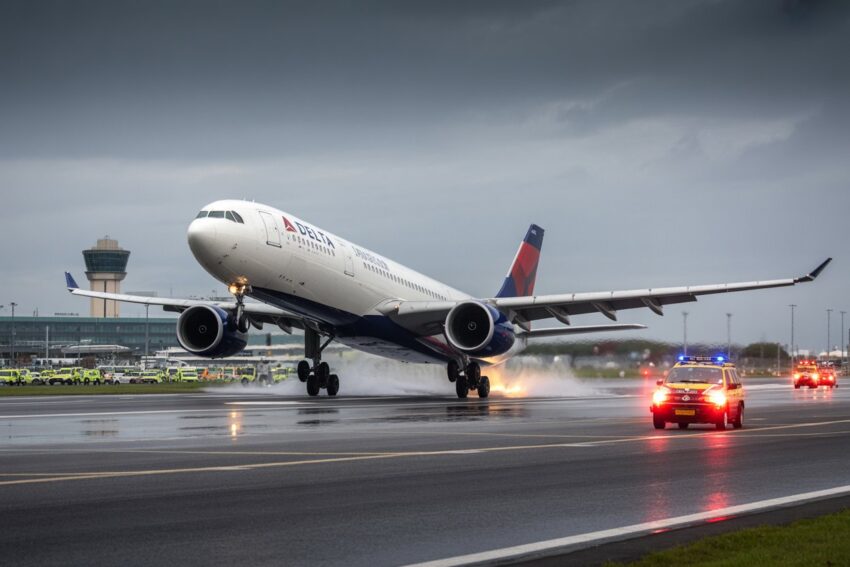
Why Delta Flight DL90 Airbus A330-900 from Orlando International to Amsterdam Schiphol Had to Make an Unexpected Emergency Landing in Dublin Airport – Full Story Inside
Why Delta Flight DL90 Airbus A330-900 from Orlando International to Amsterdam Schiphol Had to Make an Unexpected Emergency Landing in Dublin Airport – Full Story Inside
Why Delta Flight DL90 Airbus A330-900 from Orlando International to Amsterdam Schiphol Had to Make an Unexpected Emergency Landing in Dublin Airport – Full Story Inside
Delta Flight DL90, an Airbus A330-900, was on its routine journey from Orlando International Airport to Amsterdam Schiphol when something unexpected happened mid-flight. The flight, which was cruising smoothly across the Atlantic, was suddenly diverted to Dublin Airport after a medical emergency onboard. Passengers, who had been eagerly anticipating their arrival in Amsterdam, found themselves stuck in Dublin instead, facing a significant delay.
So, what exactly led to this surprising emergency landing? How did Delta’s crew handle the situation, and what impact did this diversion have on the overall journey? In this exclusive report, we dive deep into the details of this unexpected turn of events. From the moment Delta Flight DL90 made the emergency landing in Dublin, the story unfolded in ways no one could have predicted.
As you read on, you’ll uncover exactly why Delta Flight DL90 had to make this unscheduled stop, the swift actions taken by the crew, and what this means for passengers. Trust us – you won’t want to miss this gripping account of a flight gone wrong! So keep reading to get the full story inside!
Early Saturday morning, Delta Air Lines flight DL90 made headlines worldwide when it diverted to Dublin Airport after a medical emergency forced a change in its flight path. The flight had departed from Orlando International Airport (MCO) the previous evening, bound for Amsterdam Schiphol Airport (AMS). But instead of making the 8-hour transatlantic journey to the Netherlands as expected, passengers aboard the Airbus A330-900 (registration N412DX) found themselves diverted to the Irish capital for an unexpected layover.
Delta flight DL90 had been cruising across the Atlantic for over 7 hours when the aircraft’s crew made the difficult decision to divert to Dublin. Though the passengers were en route to Amsterdam, a medical emergency involving a passenger on board meant that the crew had to take immediate action. The flight crew followed standard safety procedures and landed the aircraft at Dublin Airport (DUB) to ensure the passenger could receive the medical attention required. What began as a smooth flight was now an unfolding emergency that led to a major delay for all involved.
What Led to the Diversion of Delta Flight DL90 to Dublin?
As the flight passed the halfway point of its journey across the Atlantic, the crew realized that a medical emergency required an immediate response. At this stage of the flight, the aircraft was still relatively far from its destination, but with plenty of fuel still on board, the pilots decided that a diversion to Dublin was the safest course of action.
Dublin Airport, one of Europe’s busiest hubs, is often a key location for such diversions, and its infrastructure allowed the Delta flight to land with minimal complication. The aircraft touched down at approximately 06:30 GMT, and emergency medical personnel were waiting for the flight as it arrived. While the specific details of the medical emergency have not been disclosed, it’s clear that the crew’s swift decision ensured the safety of the passenger involved, while also minimizing the risk to the other passengers on board.
The situation demonstrated the high level of preparedness and professionalism displayed by the Delta flight crew. The captain, in consultation with the airline’s operations team, took the decision to divert based on the welfare of the passenger and the airline’s safety protocols. The diversion was ultimately a success, allowing the medical team to assist and stabilize the passenger before continuing their journey.
Dublin Airport Responds: A Swift and Professional Handling of the Emergency
Dublin Airport was quick to respond to the emergency situation. Upon landing, the aircraft was guided through a standard descent procedure, despite the urgency of the situation. Emergency teams at the airport were standing by to assist the crew and manage the medical emergency efficiently.
Given that Dublin Airport was experiencing a busy morning, it was crucial for the flight to be processed quickly to ensure minimal disruption to ongoing operations. The smooth handling of the situation at the airport was essential not only for the safety of the passenger but also for maintaining the flow of incoming and outgoing flights. This diversion was a textbook example of how air traffic control, ground services, and medical teams work seamlessly together during such emergencies.
While the crew handled the emergency with professionalism, the passengers on board had to contend with the uncertainty of being diverted from their final destination. For many, this unexpected change of plans would lead to significant delays upon arrival in Amsterdam, as they now faced the challenge of rescheduling any connections they had planned or booked for their arrival at Schiphol.
The Aftermath of the Diversion: How Did the Passengers Cope?
The diversion to Dublin was a tense situation for the passengers aboard Delta flight DL90. Those who were heading to Amsterdam for work, leisure, or connecting flights were immediately concerned about their arrival time and the impact the diversion would have on their travel plans.
While the diversion certainly caused distress for those passengers, it also highlighted a sense of gratitude for the swift actions taken by the Delta crew and the emergency teams on the ground. As the Airbus A330-900 sat at Dublin Airport, the crew worked hard to reassure passengers and provide updates on the situation. The airline also ensured that any necessary accommodations were made for those who would experience longer delays.
The aircraft spent approximately an hour and a half on the ground at Dublin before it was cleared to resume its journey to Amsterdam. During this brief stop, the plane was refueled, and the medical emergency was addressed. Passengers were informed that the delay was necessary to ensure the safety of all passengers and to address the immediate medical needs of the individual involved.
At 09:34 GMT, Delta flight DL90 was cleared for departure from Dublin, resuming its journey to Amsterdam Schiphol. However, the passengers on board knew they would now face significant delays, as their flight would arrive hours later than expected. For many, this meant scrambling to find new connections or adjusting to a much later arrival in the Netherlands.
Impact on Amsterdam Schiphol: How Did the Diversion Affect Operations?
Amsterdam Schiphol, one of Europe’s busiest airports, was undoubtedly impacted by the delayed arrival of Delta flight DL90. Schiphol operates on a tight schedule, with a constant flow of international flights arriving from around the world. As a result, any significant delays can cause a ripple effect, affecting not only the passengers on the delayed flight but also those on other connecting flights.
In the case of Delta flight DL90, passengers arriving hours later than expected would likely face long lines at passport control and the risk of missed connections. The delay also meant that the flight would land at a time when Schiphol’s facilities were at their busiest, with morning arrivals from other international flights.
However, the professionalism of the airline and Schiphol’s ground handling teams ensured that the situation was managed as smoothly as possible. Passengers arriving at Schiphol were quickly assisted with their onward travel, with Delta staff on hand to help rebook connecting flights or offer guidance for those who would now miss their original connections.
Why This Diversion Should Be a Wake-Up Call for Air Travelers
While diversions are a rare but necessary part of air travel, the incident involving Delta flight DL90 serves as a reminder of the unpredictable nature of flying. Passengers should always prepare for the unexpected, especially when traveling long distances. Medical emergencies, mechanical issues, or even unexpected weather conditions can cause diversions, delays, or cancellations.
This incident also underscores the importance of having travel insurance and staying connected with airlines in case things go wrong. Travelers heading to international destinations should be aware of the risks associated with long-haul flights and make contingency plans in case delays or diversions impact their travel.
Ultimately, while Delta flight DL90’s diversion to Dublin may have caused frustration for passengers, it’s important to remember that the crew and ground services worked together efficiently to ensure the safety of everyone involved. Despite the delay, the swift action taken by Delta and Dublin Airport helped mitigate what could have been a far worse situation.
The Bigger Picture: How Airlines Handle Flight Diversions and Emergencies
Delta Air Lines, like many major airlines, has a comprehensive set of protocols in place to deal with medical emergencies and flight diversions. From the moment a medical emergency is detected on board, the flight crew works closely with air traffic control, medical professionals, and ground services to ensure the safety and well-being of the passenger in question.
Flight diversions are not always caused by medical emergencies. In some cases, aircraft may divert due to weather conditions, mechanical issues, or other operational concerns. However, in the case of Delta flight DL90, the medical emergency required immediate action. The professionalism of the crew and the efficient handling of the situation at Dublin Airport ensured that the passengers were safely cared for and that the flight was able to resume its journey after a brief stop.
Conclusion: Delta Flight DL90’s Dublin Diversion Highlights the Importance of Safety in Air Travel
Delta flight DL90’s diversion to Dublin Airport serves as a stark reminder of the unpredictable nature of air travel. While the flight’s passengers faced significant delays, the crew’s quick response and Dublin’s efficient handling of the emergency ensured that the situation was resolved swiftly and safely. Although diversions are not ideal, they are sometimes necessary to ensure passenger safety.
For those flying long-haul, it’s important to be prepared for the unexpected. Having travel insurance, staying connected with the airline, and understanding the risks involved can help mitigate the stress caused by delays and diversions.
In the end, Delta Air Lines and Dublin Airport handled the situation with professionalism and care, ensuring the safety of the passenger and allowing the flight to continue its journey to Amsterdam. While the flight’s passengers may have been delayed, the priority of keeping everyone safe was always the main concern.
The post Why Delta Flight DL90 Airbus A330-900 from Orlando International to Amsterdam Schiphol Had to Make an Unexpected Emergency Landing in Dublin Airport – Full Story Inside appeared first on Travel And Tour World.
Source: travelandtourworld.com


Sorry, the comment form is closed at this time.