


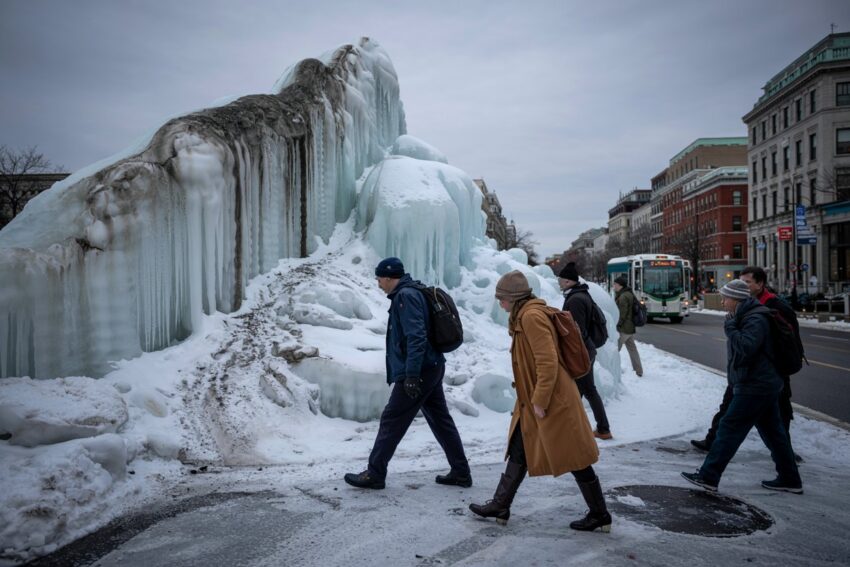
Winter Storm 2026: Ice Mountains & Commuter Delays
Winter Storm 2026: Ice Mountains & Commuter Delays
For most of the country, a winter storm is a weekend event—a flurry of activity followed by a quick cleanup. But for the Washington D.C. metropolitan area, the record-shattering winter storm of late January 2026 has left behind a stubborn, frozen inheritance. As we move into the second week of February, commuters aren’t just battling traffic; they are navigating “mountains of ice” that have effectively reshaped the region’s geography and transit patterns.
What was once a routine drive from Bethesda or a Metro ride from Arlington has turned into a high-stakes obstacle course. The storm, unofficially dubbed “Winter Storm Fern,” dropped upwards of 20 centimeters of snow across the District, but it was the subsequent freezing rain and sub-zero temperatures that turned the slush into concrete-hard ice.
The “Ice Mountain” Phenomenon
Walk through Columbia Heights or drive along the arterial roads of Northern Virginia, and you’ll see them: massive, soot-covered piles of ice. These are the “leftovers”—the result of rapid plowing followed by a deep freeze that prevented the piles from melting.
In many residential areas, these mounds have encroached on traffic lanes, turning two-lane streets into narrow, one-way gauntlets. For pedestrians, the situation is even more dire. Sidewalks in neighborhoods like Capitol Hill and Silver Spring remain encased in thick, uneven layers of ice. Bus stops have become particularly treacherous; commuters are often forced to climb over “ice walls” just to board their vehicles, leading to a spike in slips, falls, and minor injuries.
Transit in Turmoil: WMATA’s Uphill Battle
The Washington Metropolitan Area Transit Authority (WMATA) has been in “full prep and recovery mode” for nearly two weeks. Despite a massive mobilization of 2,800 employees and over 23,000 bags of de-icer, the system is still feeling the chill.
Metrobus service has been the hardest hit. As of early February 2026, dozens of routes remain on “Snow Detours.” These detours aren’t just for active snow; they are necessitated by the fact that many side streets are still too narrow for a bus to safely navigate due to those infamous ice mountains.
On the rail side, while the underground sections of the Red, Orange, and Blue lines are operating relatively normally, the above-ground stations are a different story. De-icer trains and snowplows are still being deployed to prevent “third rail” icing, which can stall trains mid-track. Commuters have been warned to expect longer wait times and to “dress for the platform,” as delays of 15 to 20 minutes remain common.
The Commuter’s Reality: A Human Toll
Beyond the logistics of salt and plows is the very real human frustration of a city that feels “frozen in time.” For parents, the lingering ice has meant a series of harrowing school drop-offs. In many D.C. neighborhoods, the ice has made it impossible for school buses to reach their usual stops, forcing families to walk blocks through hazardous conditions.
“It’s not just the delay; it’s the exhaustion,” says one commuter at the Navy Yard-Ballpark station. “You’re constantly looking down, making sure you don’t slip. By the time you get to the office, you’ve already done a full day’s work of just staying upright.”
The economic impact is also mounting. With damages from the storm estimated in excess of $4 billion nationwide, the D.C. area is feeling the pinch through lost productivity and the sheer cost of the ongoing cleanup effort.
Safety First: Tips for Navigating the Ice
Local officials in D.C., Maryland, and Virginia (DMV) continue to urge caution as more “Arctic blasts” are forecast for the coming weekend. If you must commute, consider the following:
Trust the Detours: If your bus is on a snow detour, check the MetroPulse app before you leave. Don’t wait at your usual stop if it’s on an icy side street.
The “Penguin Walk”: To avoid falls on the mountains of ice, keep your center of gravity over your front leg and take small, shuffling steps.
Report Hazards: Use the city 311 apps to report particularly dangerous ice mounds that are blocking sightlines at intersections.
High-Profile Vehicle Alert: If you drive a truck or SUV, be aware that the uneven ice can cause your vehicle to tilt or slide unexpectedly, especially on ramps.
Looking Ahead: When Will the Thaw Begin?
The National Weather Service predicts that temperatures will remain below freezing through the weekend, with wind chills potentially dropping to -20°F. This means the ice mountains aren’t going anywhere fast.
The story of the 2026 winter commute is a reminder of the fragility of our urban infrastructure. While D.C. is no stranger to snow, the “mountainous” leftovers of this particular storm have proven that the aftermath can often be more challenging than the event itself. For now, the region remains a landscape of white and grey, waiting for the first true breath of spring to clear the path.
The post Winter Storm 2026: Ice Mountains & Commuter Delays appeared first on Travel And Tour World.
Source: travelandtourworld.com



Sorry, the comment form is closed at this time.